

Finding the right psychiatrist starts with understanding your clinical needs, insurance coverage, appointment preferences, and desired treatment goals. As medical doctors, psychiatrists evaluate mental health conditions, establish clinical diagnoses, prescribe and manage medications, and monitor long-term outcomes.
When searching for local psychiatric care, it is essential to look beyond basic geographic convenience. A provider’s credentials, clinical specialties, insurance network participation, scheduling availability, and approach to follow-up care all determine whether a practice aligns with your needs.
Clarifying these practical details beforehand streamlines the intake process and prevents unexpected care delays. Arriving with a clear medical and treatment history ensures your initial psychiatric evaluation is as focused and productive as possible.
Key Takeaways
- Verify credentials and insurance: Confirm that the clinician is licensed and that the practice participates in your specific insurance plan.
- Understand provider roles: Psychiatrists, psychiatric nurse practitioners, psychologists, and therapists provide different types of mental health care.
- Prepare before your appointment: Medical records, medication lists, previous diagnoses, and treatment history can help your clinician understand your needs.
What Should You Consider Before Choosing Psychiatric Care?
A successful search for psychiatric care begins with identifying what you want help with. Consider your current symptoms, previous diagnoses, treatment history, medication needs, and whether you need ongoing psychiatric management or an initial diagnostic evaluation.
Online directories can help you identify potential providers, but the information may not always reflect current appointment availability or insurance participation. A practice may also serve patients through telehealth rather than from a physical office near you.
Contacting a practice directly can help you confirm important details before scheduling. Ask about the next available evaluation, accepted insurance plans, appointment formats, and the services provided.
Before booking, consider these factors:
- Verify licensing: Confirm that the clinician holds an active professional license in the state where care will be provided.
- Confirm visit format: Ask whether appointments are offered in person, through telepsychiatry, or through a combination of both.
- Check insurance: Verify participation with your exact health plan rather than relying only on an online directory.
- Ask about availability: Request information about the next available initial evaluation and typical follow-up scheduling.
- Clarify services: Confirm whether the practice provides medication management, psychiatric evaluations, psychotherapy referrals, or specialized treatment.
Reviewing MedPsychNC’s psychiatric services can also help you understand what types of care may be available before you contact the office.
How Do Psychiatrist, PMHNP, and Therapist Roles Differ?
Mental health care can involve several types of professionals. Understanding their roles can help you choose the type of provider that matches your clinical needs.
Psychiatrists are physicians who complete medical school and specialized psychiatric residency training. They can evaluate mental health conditions, diagnose psychiatric disorders, prescribe medication, and consider physical health factors that may affect symptoms.
Psychiatric mental health nurse practitioners, or PMHNPs, are advanced practice nurses with specialized training in psychiatric assessment and treatment. Depending on state regulations and individual qualifications, PMHNPs can evaluate patients, diagnose mental health conditions, prescribe medications, and provide ongoing psychiatric care.
Psychologists and psychotherapists generally focus on psychological assessment, psychotherapy, behavioral interventions, and counseling rather than medication prescribing.
| Provider / Care Type | Primary Clinical Focus | Common Role in Care |
| Psychiatrist (MD or DO) | Medical psychiatry, diagnosis, medication management | Diagnostic complexity, medication treatment, and ongoing psychiatric care |
| PMHNP | Psychiatric assessment and medication management | Evaluation, treatment planning, and medication follow-up |
| Psychologist / Psychotherapist | Psychotherapy and behavioral interventions | Emotional processing, coping skills, and behavioral treatment |
| Specialty Psychiatric Care | Targeted treatment for specific conditions | Additional options when standard approaches have not provided adequate improvement |
These professionals may also work together. For example, a psychiatrist may manage medication while a therapist provides psychotherapy, allowing different aspects of a patient’s treatment plan to be addressed.
How Can You Match a Psychiatrist to Your Treatment Needs?

The right psychiatric provider depends on your symptoms, diagnosis, age, previous treatment, and goals for care. Some practices focus on general adult psychiatry, while others provide specialized services for particular conditions or patient populations.
When contacting a practice, describe your primary concerns and relevant treatment history. This gives the intake team an opportunity to determine whether the clinician’s services match your needs.
Patients with treatment-resistant depression may also want to ask whether the practice provides specialized treatment options. For individuals considering TMS, TMS therapy may be discussed as part of a broader treatment plan when clinically appropriate.
Research published in the Turkish Journal of Medical Sciences has examined the use of transcranial magnetic stimulation for treatment-resistant depression and reported clinically meaningful improvements in treated patients.
When discussing specialized treatment, your clinician should consider your diagnosis, previous medications, treatment response, current symptoms, and overall medical history before recommending an intervention.
What Happens During an Outpatient Psychiatric Evaluation?
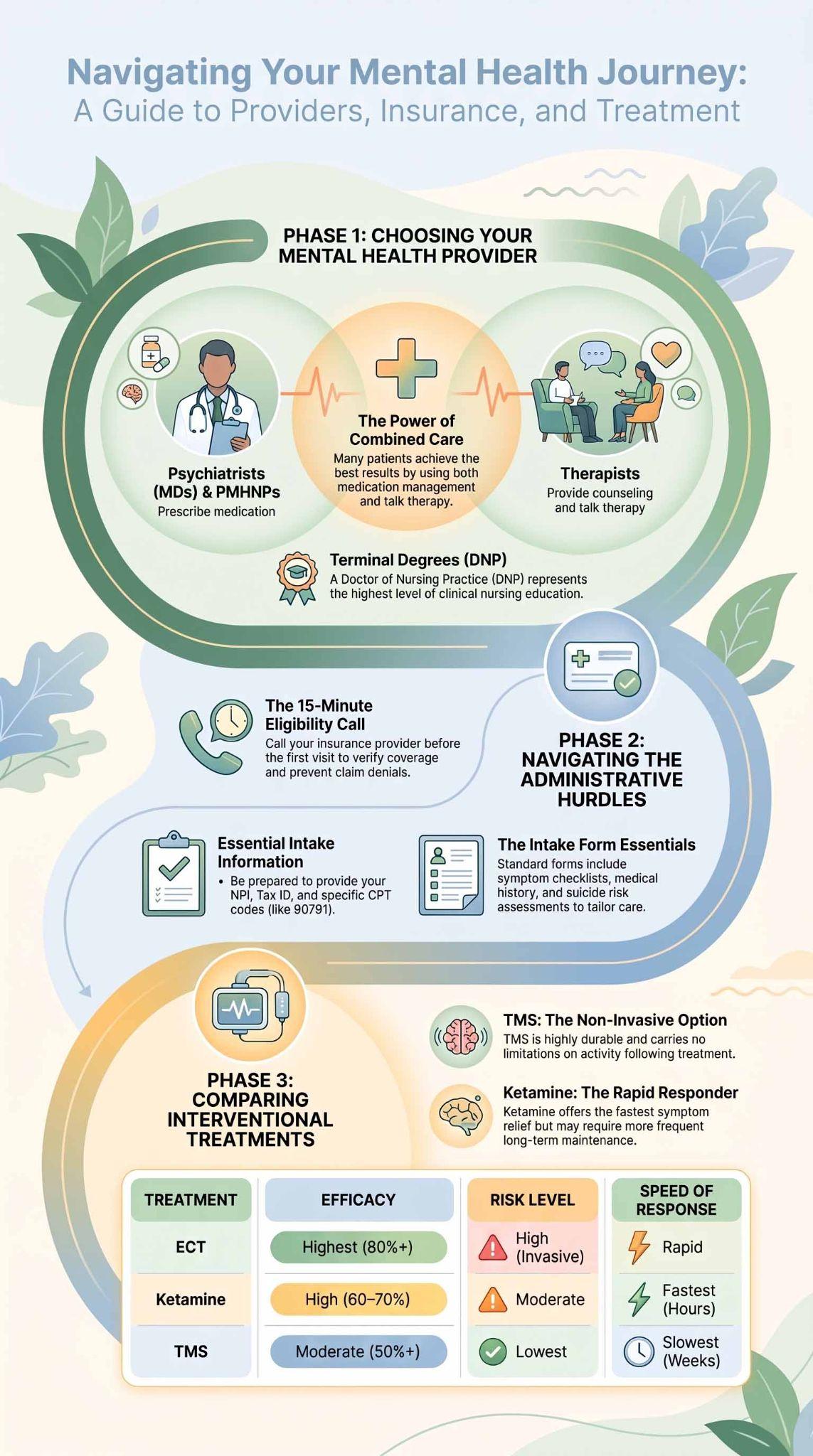
An outpatient psychiatric evaluation usually begins with a detailed review of your symptoms, medical history, psychiatric history, medications, and treatment goals. The clinician uses this information to develop a diagnostic understanding and determine appropriate next steps.
Depending on your circumstances, the evaluation may include discussion of:
- Current symptoms: When symptoms began, how severe they are, and how they affect daily functioning.
- Previous diagnoses: Psychiatric diagnoses you have received and how they were established.
- Treatment history: Previous medications, therapy, hospitalizations, or other psychiatric interventions.
- Medical history: Physical health conditions, current medications, allergies, and other relevant medical information.
- Family history: Mental health and medical conditions that may be relevant to your evaluation.
- Daily functioning: Sleep, work or school responsibilities, relationships, stress, and other factors affecting your well-being.
- Treatment goals: What you want to improve and what concerns you have about potential treatment options.
Your clinician may recommend medication management, psychotherapy, additional assessment, laboratory testing, or coordination with another healthcare professional.
Follow-up appointments allow the clinician to monitor symptoms, assess medication response, review side effects, and make changes when clinically appropriate.
What Should You Know About the Cost of Psychiatric Care?

The cost of psychiatric care varies according to insurance coverage, deductibles, copayments, coinsurance, appointment type, and practice billing policies.
Before your first appointment, ask the practice about:
- Your insurance plan’s network status
- Copayment or coinsurance requirements
- Deductible responsibilities
- Self-pay evaluation and follow-up rates
- Cancellation or missed-appointment fees
- Additional charges for forms or specialized services
Self-pay costs can vary considerably between practices and appointment types. Rather than relying on general online estimates, request the practice’s current fee information before scheduling.
Patients using commercial insurance, Medicare, or Medicaid should also confirm their individual benefits directly with the insurer. A practice’s participation with an insurance company does not necessarily mean every plan or network tier is covered.
How Can You Prepare for Your First Psychiatric Appointment?
Preparing relevant information before your first visit can make the evaluation more efficient. You do not need to remember every detail of your mental health history, but having important records available can help your clinician understand your previous care.
Consider preparing:
- A current list of prescription and over-the-counter medications
- Previous psychiatric diagnoses
- Records from prior mental health treatment when available
- Information about previous medications and their effects
- Relevant medical conditions and allergies
- A list of current symptoms and when they began
- Questions about diagnosis or treatment
- Your insurance information and identification
If another healthcare professional has treated you for a related condition, ask whether records can be transferred to your new psychiatric provider. Sharing relevant information can improve communication and reduce unnecessary repetition during the evaluation process.
How Do You Maintain Ongoing Psychiatric Care?
Finding a provider is only the first step. Long-term psychiatric care requires regular follow-up so your clinician can monitor symptoms and evaluate whether your treatment continues to meet your needs.
Before beginning treatment, ask how the practice handles routine follow-up appointments, prescription refills, urgent questions, and communication between visits.
Useful questions include:
- Provider consistency: Will I usually see the same clinician during follow-up appointments?
- Medication monitoring: How frequently will medications be reviewed?
- Prescription refills: What is the process for requesting refills?
- Urgent concerns: How can I contact the practice when an urgent concern develops?
- Care coordination: Can the practice communicate with my primary care provider or therapist when appropriate?
- Appointment changes: What happens if my regular clinician is unavailable?
Clear communication about these procedures can make ongoing treatment easier to manage and help prevent interruptions in care.
For additional information about scheduling and available services, you can contact MedPsychNC.
Taking the Next Step in Your Care
Choosing the right psychiatric provider comes down to balancing clinical expertise, insurance coverage, and a treatment format that fits your routine. Preparing your questions and medical history beforehand helps establish a clear, coordinated path toward ongoing symptom management.
If you are ready to begin, MedPsychNC provides comprehensive psychiatric evaluations, evidence-based medication monitoring, and virtual care options for patients throughout North Carolina.
FAQ
How do I find a qualified psychiatrist near me if appointment availability is limited?
If local waitlists are long, consider expanding your search to psychiatric mental health nurse practitioners (PMHNPs), exploring statewide telepsychiatry options, or requesting to be placed on clinic cancellation lists. You can also contact your insurance carrier’s behavioral health department directly to request an up-to-date directory of in-network providers currently accepting new patients.
What credentials should I verify before scheduling an evaluation?
Ensure the clinician holds an active, unrestricted medical or nursing license in your state and board certification in general or specialty psychiatry. It is also wise to confirm their experience treating your specific symptoms, their practice policies regarding controlled substances (if applicable), and active network participation with your health plan.
What typically occurs during outpatient psychiatric visits?
Outpatient visits focus on clinical evaluation, ongoing medication management, side effect monitoring, and treatment plan adjustments. While some psychiatrists integrate brief supportive therapy, appointments primarily center on the medical and neurobiological aspects of care, often coordinating alongside an external psychotherapist.
What is the main difference between a psychiatrist and a therapist?
A psychiatrist is a licensed physician (MD or DO) who diagnoses complex conditions and prescribes medication. Psychotherapists (such as LCSWs, LPCs, or clinical psychologists) focus on talk therapy, behavioral interventions, and coping strategies. They do not prescribe medications, but frequently collaborate with psychiatrists to provide comprehensive care.
How can patients access specialized care for treatment-resistant depression?
Accessing advanced care begins with a comprehensive psychiatric evaluation to review past medication trials, dosages, and therapeutic outcomes. If traditional first-line treatments have proven ineffective, your clinician can evaluate your eligibility for interventional therapies, such as transcranial magnetic stimulation (TMS), or coordinate referrals to specialized outpatient clinics.
References
- https://journals.tubitak.gov.tr/medical/vol52/iss4/56/
- https://www.ncbi.nlm.nih.gov/books/NBK546682/