

Choosing outpatient psychiatric care starts with your treatment needs, insurance coverage, and scheduling preferences. A qualified doctor provides medical evaluations and medication management for depression, anxiety, ADHD, and mood disorders.
MedPsychNC delivers evidence-based outpatient care and telepsychiatry across North Carolina.
Key Takeaways for Psychiatric Care in Cary, NC
- Choose a psychiatrist who treats your condition and meets your care needs.
- A first visit may cover symptoms, health history, medicines, past treatment, substance use, and safety.
- Check your insurance, the doctor’s credentials, open appointments, and follow-up care before treatment begins.
What Should You Look for in a Psychiatrist in Cary, NC?
The right psychiatrist depends on your diagnosis, treatment needs, access to care, and insurance. It also helps to choose a provider who treats your condition often.
The American Psychiatric Association recommends a full psychiatric evaluation. This may cover your main concerns, mental health history, medical history, current medicines, substance use, and past treatment. The clinician may also ask how symptoms affect sleep, work, school, or daily life.
Local searches may show different types of mental health providers. A psychiatrist is a medical doctor who has completed medical school and specialty training in psychiatry. A Psychiatric Mental Health Nurse Practitioner, or PMHNP, is an advanced practice nurse with training in mental health care.
Both may provide psychiatric assessment and medication care within their professional scope.
Your condition also matters. A comprehensive ADHD evaluation and care plan may differ significantly from an evaluation for bipolar disorder, OCD, panic disorder, or severe depression that has not improved with prior treatment.
Before scheduling, check:
- Credentials: Know who will provide your care.
- Clinical focus: Look for experience with your condition.
- Treatment options: Ask about medicines, therapy, and other services.
- Access: Check appointment times and follow-up visits.
- Insurance: Confirm your exact health plan.
MedPsych Integrated lists psychiatric evaluations, medication management, psychotherapy, telepsychiatry, and genetic testing among its services. Its Cary office is at 1110 SE Cary Pkwy, Suite 207.
How Does a Psychiatric Medication Evaluation Work?

A medication evaluation looks at your symptoms, health history, past psychiatric care, and current medicines. The clinician also checks for factors that may affect medication safety.
The first visit may focus on your main concern. You may be asked when your symptoms began, how often they occur, and how they affect daily life.
Bring a list of your medicines to the visit. Include prescription drugs, over-the-counter medicines, and supplements. This can help the clinician check for possible drug interactions.
Your past treatment is also important. The clinician may ask about past diagnoses, medicines, therapy, hospital stays, side effects, and your response to treatment.
Your medical history can affect psychiatric care. The clinician may ask about allergies, other health problems, sleep, substance use, and past medication reactions.
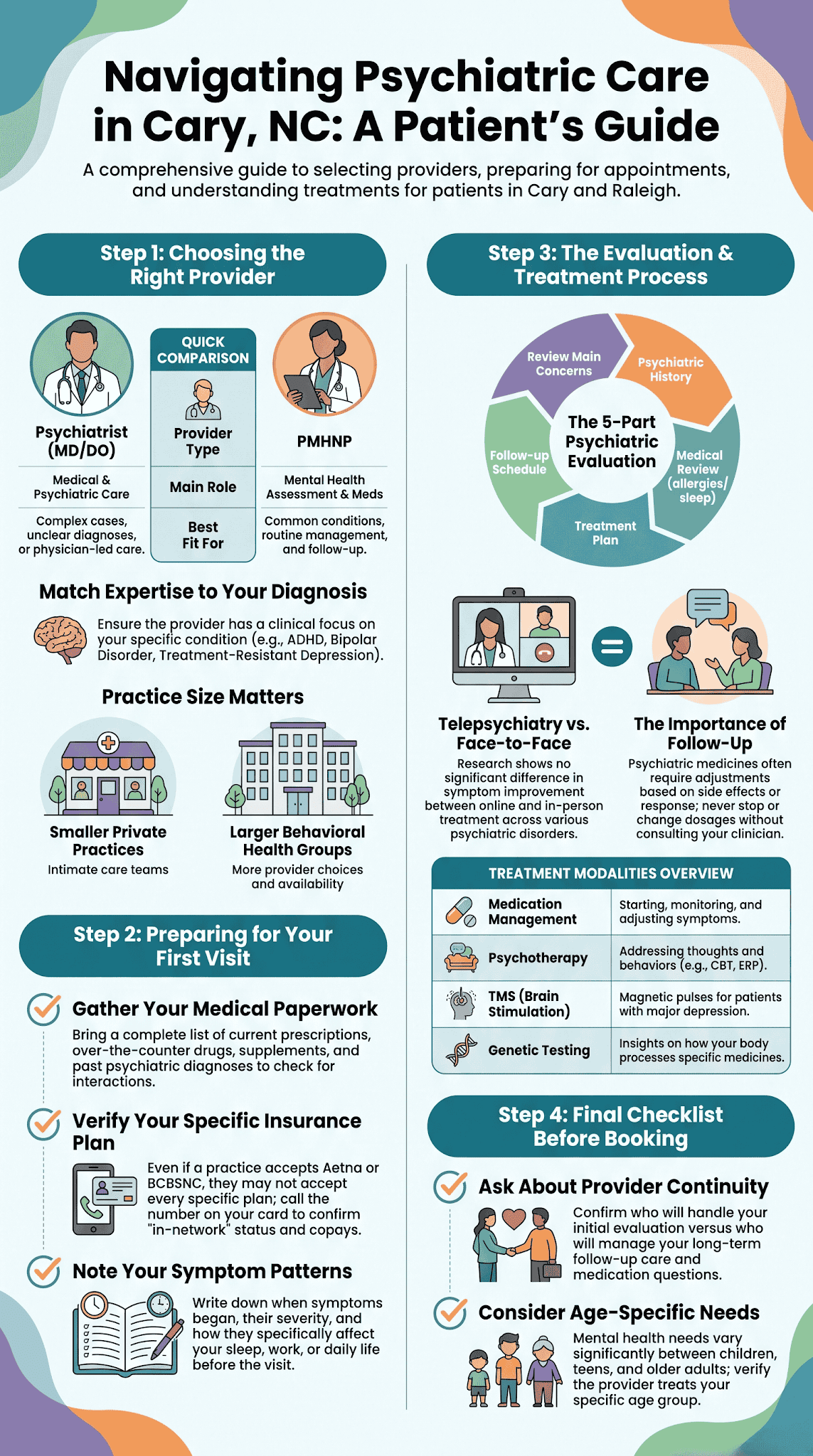
A typical evaluation may include:
- Main concerns: Symptoms, timing, severity, and effects on daily life.
- Psychiatric history: Past diagnoses, medicines, therapy, and treatment response.
- Medical review: Health conditions, allergies, medicines, sleep, and substance use.
- Treatment plan: Medicine, therapy, more testing, or referral.
- Follow-up: Symptoms, side effects, and treatment changes.
The visit is not only about choosing a medicine. The clinician also needs to review your diagnosis, other medicines, health conditions, past treatment, and treatment goals.
MedPsych Integrated describes its process as an initial psychiatric evaluation followed by a treatment plan and follow-up care. Its listed services include medication management and psychiatric evaluations.
Follow-up is important. Psychiatric medicines may need changes based on your response or side effects. Do not stop or change a prescribed medicine without speaking with the prescribing clinician.
Should You Choose a Psychiatrist or a PMHNP?
Psychiatrists and PMHNPs can both provide psychiatric care, but their education and training differ.
A psychiatrist is a physician who completes medical school and residency training in psychiatry. A PMHNP is an advanced practice nurse with specialized training in mental health.
Both may provide psychiatric assessment and medication management within their professional roles.
The best choice depends on the type of care you need. Some patients prefer to see a physician. Others may receive appropriate care from a PMHNP.
| Provider | Main role | May fit |
| Psychiatrist, MD/DO | Medical and psychiatric care | Complex cases or physician care |
| PMHNP | Mental health assessment and medication care | Many common conditions and follow-up care |
The difference may matter more when a patient has several health problems, has tried several medicines, or has an unclear diagnosis.
Before an appointment, ask:
- Who will complete the first evaluation?
- Who will prescribe medicines?
- Who will provide follow-up care?
- Is physician consultation available?
- What happens if treatment does not help?
MedPsych Integrated lists a team that includes psychiatrists, PMHNPs, and physician assistants. Dr. Andrew Farah, MD, is listed as medical director.
Provider credentials are only one part of care, especially when coordinating specialized care options such as adolescent ADHD treatment. Follow-up is equally critical so adjustments can be made whenever symptoms change.
How Do Private Practices Compare With Larger Behavioral Health Groups?

Private practices and larger behavioral health groups can both provide outpatient psychiatric care. They may differ in provider choice, scheduling, insurance, and how care is organized.
A smaller practice may have fewer clinicians but a smaller care team. A larger group may have more providers and more appointment options.
Neither model is right for every patient. Look at the actual services and care process.
When comparing local practices, evaluate whether the clinic provides comprehensive outpatient mental health services under one roof. MedPsychNC provides psychiatric evaluations, medication management, therapy, telepsychiatry, and genetic testing while maintaining in-network participation with major insurers like Aetna and the NC State Health Plan.
As highlighted by PubMed:
“No significant difference was seen between telepsychiatry and face-to-face treatment when all the studies/diagnoses were combined. Telepsychiatry achieved a symptom improvement effect for various psychiatric disorders similar to that of face-to-face treatment.” , PubMed
Before choosing a practice, ask about:
- Appointment length
- Follow-up schedule
- Provider continuity
- Telepsychiatry
- Insurance coverage
- Cancellation rules
- Between-visit questions
A short follow-up may be enough for some patients with stable symptoms. A new or worsening problem may need a longer assessment. Ask about this before treatment begins.
How Can Patients Verify Insurance and Psychiatric Care Costs?
Check your insurance before the first visit. Coverage can vary by plan, provider, deductible, and type of service.
Aetna, Blue Cross Blue Shield of North Carolina, Cigna, UnitedHealthcare, and the NC State Health Plan are among the plans used by psychiatric practices in Cary. But a practice that accepts an insurance company may not accept every plan from that company.
Ask the office to check your exact plan. You can also call the number on your insurance card.
Useful questions include:
- Is this clinician in network?
- What is my copay?
- Does my deductible apply?
- Is telepsychiatry covered?
- Are therapy visits covered?
- Are tests billed separately?
- What will follow-up visits cost?
MedPsychNC works with regional health plans, including Aetna and the NC State Health Plan. Always contact the clinic intake coordinator directly to verify current panel status and confirm your copay responsibilities before scheduling your appointment.
The cost is more than the first visit. Consider the evaluation, follow-up visits, medicines, and any tests that may be ordered.
That gives you a better view of the total cost of care.
Which Psychiatric Treatment Options May Be Available in Cary?
Psychiatric treatment may include medication management, psychotherapy, telepsychiatry, or other services. The right treatment depends on the patient’s diagnosis and health history.
Medication management involves starting, changing, or monitoring psychiatric medicines. The clinician reviews symptom changes, side effects, other medicines, and health conditions before making changes.
Therapy may also be part of treatment. Cognitive behavioral therapy, exposure and response prevention for OCD, and trauma-focused therapy are examples of treatments used for certain conditions.
Some Cary practices also offer specialized care. Transcranial magnetic stimulation, or TMS, uses magnetic pulses to affect brain activity. It may be used for some patients with depression.
Research from BMC Medical Genomics shows:
“Transcranial magnetic stimulation (TMS) is an established treatment for major depressive disorder (MDD), yet response rates remain suboptimal and biomarkers predictive of treatment outcomes are currently lacking.” , BMC Medical Genomics
Some practices also offer pharmacogenomic testing, such as GeneSight. These tests may give information about how a person’s genes affect the way certain medicines are processed.
Genetic testing does not replace a psychiatric evaluation. The results are one part of the clinical decision.
| Treatment | Main use |
| Medication | Treat and monitor symptoms |
| Psychotherapy | Address thoughts and behavior |
| TMS | Brain stimulation for some conditions |
| Genetic testing | Add information about some medicines |
Treatment should match the patient’s condition and medical history. More treatment is not always better.
MedPsych Integrated lists medication management, psychotherapy, telepsychiatry, psychiatric evaluations, and genetic testing among its Cary services.
How Should Patients Compare Treatment Approaches?

Treatment should begin with the diagnosis and the patient’s clinical history. The same treatment may not be right for every person.
A clinician may recommend medicine, therapy, or both. The choice can depend on symptom severity, past treatment, side effects, medical history, and patient preference.
For example, a person struggling with persistent anxiety disorders or depression may receive medicine, therapy, or a combination of both, while someone with ADHD may need prescription management alongside practical organizational strategies.
A person with OCD may need a type of therapy that focuses on obsessive thoughts and compulsive behavior.
Ask how the practice will track your progress. Also ask when the treatment plan will be reviewed.
The National Institute of Mental Health states that mental health treatment may include psychotherapy, medication, or a combination of treatments, based on the person and condition.
Follow-up is key. If symptoms do not improve, the clinician may review the diagnosis, treatment, dose, side effects, or other possible causes.
How Can Patients Choose the Right Psychiatrist in Cary, NC?
Choosing a psychiatrist in Cary starts with your main reason for seeking care. Look for a provider who treats your condition and offers the type of care you need.
If you need care for ADHD, anxiety, depression, bipolar disorder, OCD, or another condition, check the provider’s clinical focus. Then review the provider’s credentials, appointment times, insurance, and follow-up process.
A psychiatrist may be a good fit when you want care from a physician or have more complex medical or psychiatric needs. A PMHNP may also provide appropriate assessment and medication care for many patients.
Access matters, too. A provider may be a good clinical match but hard to see on a regular basis. Ask about the first available appointment and the usual follow-up schedule.
Use this checklist:
- Match expertise: Look for experience with your condition.
- Check credentials: Know who will treat you.
- Ask about access: Check the first available appointment.
- Review services: Ask about medicine and therapy.
- Verify insurance: Confirm your exact plan.
- Ask about follow-up: Know who will manage your care.
- Check communication: Ask how medication questions are handled.
Age can also affect psychiatric care. Children, teens, adults, and older adults may have different mental health and medication needs. Ask whether the provider treats your age group.
Taking the Next Step in Your Care
Choosing the right psychiatric support starts with finding a provider who aligns with your clinical needs, insurance network, and schedule. A thorough first visit establishes the foundation for an individualized treatment plan and ongoing symptom management.
If you are ready to begin, MedPsychNC offers comprehensive psychiatric evaluations, dedicated medication management, and virtual care options. Contact our intake team to verify your insurance benefits and schedule an initial consultation.
FAQs
How do I find a qualified psychiatrist near me accepting new patients?
Check your insurance plan’s regional provider directory, request recommendations from your primary care doctor, or contact outpatient behavioral health clinics in Cary directly to verify provider availability and intake timelines.
What does a psychiatrist do during an initial visit?
A psychiatrist evaluates your emotional concerns, reviews your medical and psychiatric history, and recommends a targeted plan that may include medication and therapy. They also assess current lifestyle factors and personal treatment goals.
How long does an initial psychiatric evaluation usually take?
An initial diagnostic consultation typically lasts 45 to 60 minutes, while routine medication follow-up visits take 15 to 30 minutes. This allows sufficient time to discuss treatment progress and evaluate any side effects.
What should you do during an acute mental health crisis?
If you experience severe distress or thoughts of self-harm, call or text the 988 Suicide & Crisis Lifeline at 988 immediately for free, confidential, 24/7 support. You can also visit your nearest emergency room for urgent care.
What happens if prescribed psychiatric medication fails to improve symptoms?
Your clinician will review your diagnosis, adjust your prescription dose, or recommend alternative clinical options like psychotherapy or pharmacogenomic testing. Always consult your prescribing doctor before making any changes to your daily regimen.