

Can a psychiatrist help with sleep disorders? Sleep disturbances often signal more than simple fatigue and can indicate underlying mental health conditions. Chronic insomnia or excessive sleepiness frequently occur alongside depression, anxiety, or trauma, creating a complex interaction between brain chemistry and behavior.
Psychiatrists evaluate both biological and psychological factors to determine whether sleep problems are primary disorders or secondary to mood and anxiety conditions.
Through structured assessments, behavioral strategies like Cognitive Behavioral Therapy for Insomnia, and personalized medication plans, they work to restore healthy sleep patterns while addressing psychiatric symptoms. Keep reading to understand when professional evaluation is essential and how treatment can improve overall mental health.
Key Takeaways
- Sleep disorders are often bidirectional with anxiety, depression, bipolar disorder, or PTSD.
- Psychiatrists evaluate and treat insomnia, circadian rhythm disruptions, parasomnias, hypersomnolence, and narcolepsy.
- Combining behavioral therapy and medication generally produces the most effective and sustainable outcomes.
Chronic Sleep Problems Can Signal Mental Health Conditions
Trouble falling asleep, staying asleep, sleeping too much, or waking up repeatedly may point to depression, bipolar disorder, anxiety, PTSD, or ADHD. Individuals may wonder when to see a psychiatrist to determine if professional care is needed. Psychiatrists pay attention to how these conditions change the brain’s sleep patterns, which helps them plan treatment.
“Sleep disturbances such as insomnia and hypersomnia are highly prevalent and clinically consequential across multiple psychiatric disorders, and they are now recognized not merely as symptoms but as active contributors to onset, course, and relapse” – PLOS Mental Health
Medical data shows that poor sleep is not just a side effect of mental health issues; it actively changes how the brain handles stress.
Clinical records prove that treating depression without fixing sleep patterns usually fails, which is why medical guidelines require treating both issues together from day one.
How Sleep Problems Affect Daily Life

Constant exhaustion, brain fog, and quick tempers are clear warning signs that a sleep issue needs professional care.
Doctors look closely at how these symptoms disrupt daily life, such as dropping grades at school or constant arguments at home, to choose the right level of treatment.
Even small disruptions add up. Teens who sleep poorly may struggle in class. Moodiness at home. Withdrawal from friends. That’s why evaluation matters.
Range of Sleep Disorders Psychiatrists Treat
Psychiatrists handle chronic insomnia, circadian rhythm issues, parasomnias, hypersomnia, and narcolepsy. Sometimes there is a structural problem or a breathing problem, like sleep apnea. In those cases, they refer patients to specialists.
Sleep Disorders Table
| Disorder Type | Key Characteristics | Psychiatrist Role |
| Chronic Insomnia | Trouble falling or staying asleep for months | CBT-I, medication, monitoring |
| Circadian Rhythm Disorders | Misaligned sleep schedule (night owls, shift work) | Sleep scheduling, light therapy, medications |
| Parasomnias | Nightmares, sleepwalking, night terrors | Safety planning, behavior support |
| Hypersomnia / Narcolepsy | Excessive daytime sleepiness, sudden sleep episodes | Medication, sleep hygiene, coordination with neurologists |
| Sleep Problems Related to Mental Health | Insomnia or oversleeping linked to depression or anxiety | Psychiatric care, CBT-I, medication |
Referrals happen if sleep apnea is suspected. Or neurological problems. Or when treatment alone isn’t working.
Behavioral Therapy Is First Step

Cognitive Behavioral Therapy for Insomnia, CBT-I, comes first. Choosing the right provider is essential, which is why understanding how to choose a good psychiatrist can guide patients toward effective care. CBT-I helps people change thoughts and habits that keep them awake, while psychiatrists monitor progress and adjust plans as needed.
“Insomnia is commonly comorbid with psychiatric disorders and warrants treatment in its own right; cognitive behavioral therapy for insomnia (CBT‑I) has emerged as an effective intervention across psychiatric populations” – Current Sleep Medicine Reports
Key CBT-I Techniques
Stimulus control: Bed is for sleep, not wakeful activity.
Sleep restriction: Less time in bed to boost sleep drive.
Cognitive restructuring: Challenge anxious or catastrophic thoughts about not sleeping.
Integrating Behavior
Keep a sleep log. Adjust routines, light exposure, and environment. Add medication if the biology of sleep is disrupted.
Medications When Therapy Isn’t Enough
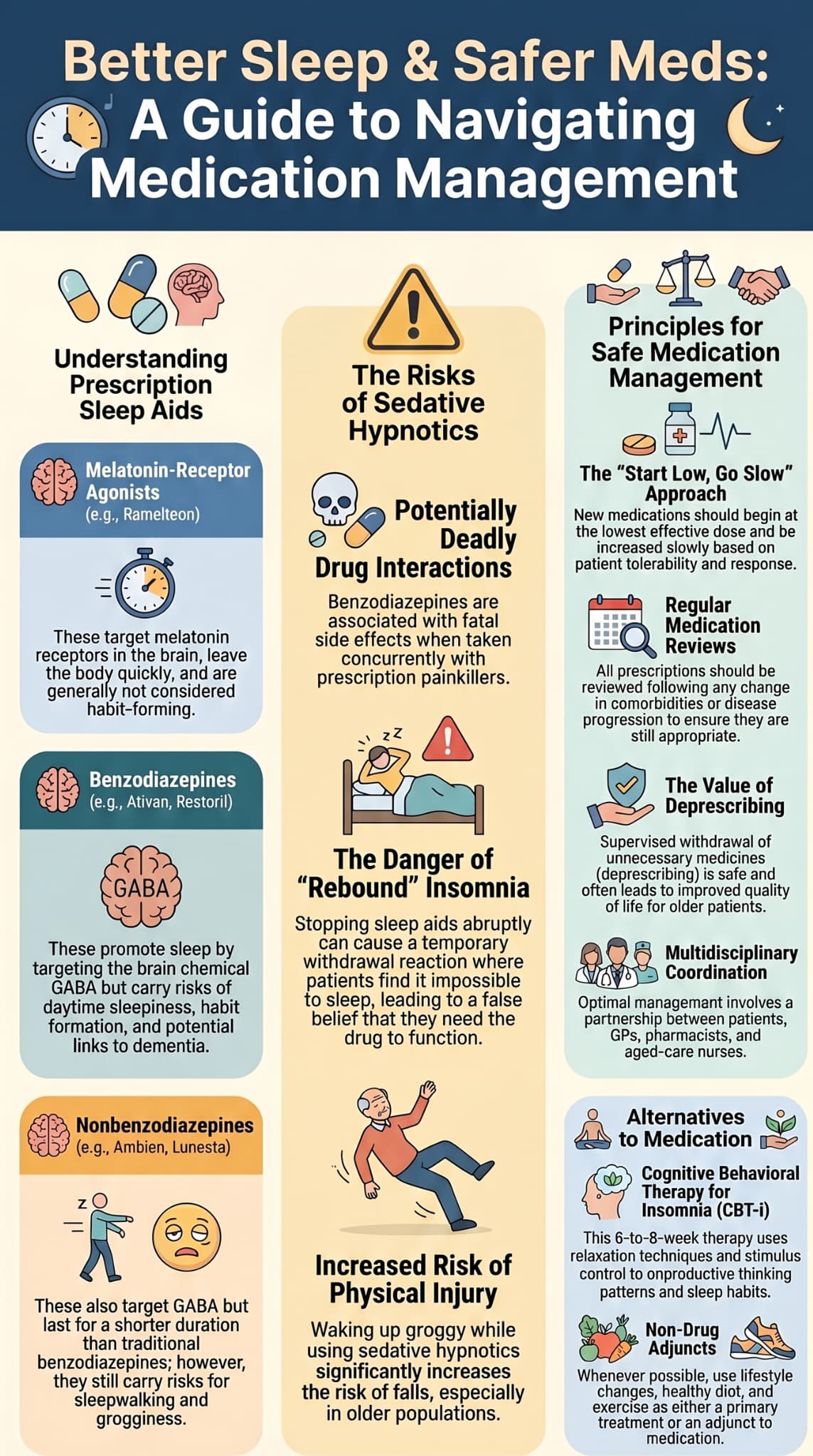
When lifestyle changes are not enough, prescription sleep aids can help, but they carry serious risks like morning grogginess or physical dependency.
To protect patient safety, medical professionals start with the smallest dose possible and closely watch for side effects while using talk therapy to build permanent habits.
Psychiatric Sleep Medications Table
| Medication Class | How It Works | Examples |
| Orexin Receptor Antagonists | Reduce brain signals that keep you awake | Belsomra, Quviviq |
| Sedating Antidepressants | Low-dose sedation to help start sleep | Trazodone, Mirtazapine |
| Melatonin Receptor Agonists | Adjust the body clock | Rozerem (ramelteon) |
| Z-Drugs | Boost GABA for faster sleep | Ambien, Lunesta |
Medication is closely monitored. Doses start low and increase slowly. Therapy continues at the same time to support healthy habits.
Psychiatric Sleep Evaluations Combine History, Logs, and Screening

Psychiatrists start with a detailed conversation, often performing a thorough psychiatric evaluation to assess sleep patterns. They ask about bedtime, wake time, nighttime awakenings, and routines, reviewing medications, supplements, and caffeine intake.
If structural or breathing problems are suspected, referrals to a sleep lab or pulmonologist are made.
Daily sleep diaries are essential because human memory is unreliable after a bad night of sleep.
Looking at a written chart of exact caffeine times and midnight wake-ups reveals hidden habits that a standard doctor’s visit might miss.
Psychiatrists also screen for anxiety, depression, PTSD, or ADHD. These conditions can disrupt sleep. Evaluations usually take forty-five to sixty minutes, sometimes longer. It can feel intense. But this thorough approach ensures nothing is missed.
Managing Expectations
Sleep improvement takes time. Weeks, sometimes more. It is gradual. Therapy and medication usually continue together. Regular follow-up allows psychiatrists to track progress and make adjustments.
Integrated Psychiatric Care Improves Sleep and Mental Health
Medication and behavioral therapy work best together. One stabilizes brain chemistry. The other builds sustainable habits. Patients often notice improved mood, better focus, and fewer daytime naps.
Psychiatrists tailor care for each person. One patient responds to light therapy, another to low-dose medication, another to both. Personalization is key. And follow-through.
Benefits of Integrated Care
Better sleep. Mood stabilizes. Concentration improves. Relapse becomes less likely. Patients feel more alert, more functional.
Patient Engagement
Sleep diaries help track progress. Following a routine matters. Patients note how medications or therapy affect sleep. Open communication with the psychiatrist is essential. Sharing observations helps refine treatment.
When to Seek Psychiatric Care
Get help if insomnia or excessive sleepiness lasts weeks. Or if it interferes with school, work, or friendships. Daytime fatigue, poor focus, or irritability despite lifestyle changes is a warning.
And do not wait. Untreated sleep disorders often get worse. They are linked to depression, anxiety, and other mental health problems. Early intervention prevents complications and restores daily functioning.
Integrated Care Makes a Real Difference
Struggling with sleep issues alongside anxiety or depression can leave you drained, and trying to manage it alone often backfires. The reality is, missing the link between medication and behavior slows progress and keeps symptoms around longer.
MedPsychNC offers integrated care that combines telepsychiatry, medication management, and behavioral support. Working with an integrated psychiatric team offers a clear, structured path to recovery through a mix of online visits, therapy, and medical tracking.
This combined approach removes the guesswork from treatment, helping people regain steady energy, better focus, and stable moods without relying on internet rumors.
FAQs
How can a psychiatrist for sleep problems help with insomnia or poor sleep quality?
A psychiatrist for sleep problems can evaluate chronic insomnia, sleep-wake disorders, and irregular sleep patterns. They assess difficulty falling asleep, trouble staying asleep, waking up too early, and daytime impairment.
Through psychiatric sleep care, they may recommend CBT-I, sleep hygiene strategies, or medication for insomnia. A personalized sleep treatment plan improves sleep quality and supports mental health and insomnia management.
What behavioral approaches are used in sleep disorder treatment?
Behavioral sleep medicine focuses on improving bedtime routines, sleep hygiene, and circadian rhythm alignment. Therapists may use cognitive behavioral therapy for insomnia (CBT-I) to reduce sleep-related distress and nighttime anxiety.
Non-drug sleep treatments help regulate the sleep-wake cycle, reduce fragmented sleep, and improve sleep onset or maintenance insomnia. These approaches promote better sleep at night without relying solely on medication.
When should someone seek psychiatric sleep care for mental health-related sleep issues?
Sleep disturbances related to depression, anxiety, or sleep anxiety indicate the need for psychiatric sleep care. Nightmares, hypersomnia, REM sleep issues, or nighttime anxiety may signal underlying mental health and insomnia problems.
Early sleep evaluation and psychiatric consultation can address sleep and mood disorders, support sleep recovery, and create a structured sleep treatment plan to improve overall mental health and daytime functioning.
How does medication management work in sleep-focused psychiatric care?
Psychiatrists may prescribe sleep medications for insomnia, hypersomnia, narcolepsy, or parasomnia when behavioral strategies alone are not enough. Medications are combined with CBT-I or other therapy for insomnia to ensure safe and effective treatment.
Ongoing sleep assessments monitor nighttime awakenings, sleep disruption, and daytime impairment. This approach balances pharmacologic treatment with non-drug sleep interventions for long-term sleep improvement.
What can patients do at home to support better sleep at night?
Healthy sleep habits enhance sleep recovery and complement psychiatric sleep care. Patients should maintain a consistent bedtime routine, follow sleep hygiene practices, and manage circadian misalignment.
Relaxation strategies and keeping a regular sleep-wake cycle help reduce sleep-related distress, restless sleep, and fragmented sleep. Following these practices alongside sleep-focused psychiatric care improves difficulty sleeping and overall sleep quality over time.
References
- https://journals.plos.org/mentalhealth/article?id=10.1371%2Fjournal.pmen.0000531&utm
- https://link.springer.com/article/10.1007/s40675-016-0055-y
Related Articles
- https://medpsychnc.com/when-to-see-a-psychiatrist/
- https://medpsychnc.com/how-to-choose-a-good-psychiatrist/
- https://medpsychnc.com/services/raleigh-psychiatric-evaluations/