

Can a Psychiatrist Treat Work-Related Stress?
Work-related stress can be treated by a psychiatrist when persistent symptoms interfere with sleep, mood, concentration, physical health, or day-to-day functioning.
The World Health Organization recognizes burnout as an occupational phenomenon. Psychiatrists diagnose and treat the conditions that often develop alongside it. These include anxiety, depression, and adjustment disorder.
Stress from workload, workplace conflict, organizational change, or job insecurity can all reach a clinical level. A psychiatric evaluation determines whether what you’re experiencing is expected stress or a diagnosable condition.
Read on to understand when psychiatric care makes sense, what treatment looks like, and how MedPsych Integrated can help.
Key Takeaways
- Treats Real Conditions: Psychiatrists don’t diagnose burnout itself. Instead, they treat the health issues it causes, like anxiety, depression, and sleep problems.
- Personalized Care: Treatment is tailored to you and may include therapy, medication, or a combination of both to help you recover.
- Combined Solutions: Lasting recovery usually requires two things: professional mental health care and real changes at work.
Can a Psychiatrist Treat Work-Related Stress?
Yes. Psychiatrists regularly treat mental health conditions linked to ongoing workplace stress. The first step is finding out whether work stress has developed into a condition that needs medical care.
Most people deal with stress at work at some point. That alone does not mean they have a mental health condition. The concern starts when stress lasts for weeks or months and begins affecting sleep, mood, concentration, or work performance. When symptoms continue despite rest or time away from work, a psychiatric evaluation can help identify the cause.
A psychiatrist evaluates emotional symptoms, medical history, sleep, cognitive function, workplace demands, medications, and family mental health history before making a diagnosis.
The evaluation includes emotional symptoms, sleep, concentration, work performance, medical history, medications, and family mental health history. Looking at all of these factors helps identify the condition behind the symptoms instead of treating stress alone.
Work-related stress is not a psychiatric diagnosis by itself. Long-term workplace stress can contribute to conditions such as adjustment disorder, major depressive disorder, generalized anxiety disorder, or post-traumatic stress disorder after a traumatic workplace event.
Clinical guidelines recommend psychiatric evaluation when work-related symptoms impair occupational performance, relationships, or routine daily activities.
Common diagnoses include:
- Adjustment disorder
- Generalized anxiety disorder
- Major depressive disorder
- Panic disorder
- Stress-related insomnia
A clear diagnosis guides treatment. Some people improve with psychotherapy alone. Others benefit from medication, behavioral strategies, or both. The treatment plan depends on symptoms, medical history, and daily functioning.
At MedPsych Integrated, we begin with a comprehensive psychiatric evaluation. We take time to understand workplace demands, medical history, and emotional health before developing an individualized treatment plan.
How Does Work Stress Become a Mental Health Condition?
Work stress becomes a mental health condition when symptoms last, become more severe, or interfere with everyday life. The longer symptoms continue, the more likely they are to affect work, relationships, and overall well-being.
Short periods of work pressure are common. Most people recover after taking time off or completing a demanding project. A psychiatrist becomes concerned when emotional distress continues despite those changes or begins affecting several areas of daily life.
The World Health Organization explains that unhealthy work environments can contribute to poor mental health. It also recognizes that employers and healthcare professionals both play a role in supporting mental well-being.
| Situation | Expected Occupational Stress | Mental Health Condition |
| Duration | Temporary | Weeks or months |
| Sleep | Occasional disruption | Persistent insomnia |
| Mood | Temporary frustration | Ongoing anxiety or depression |
| Performance | Mostly preserved | Significant decline |
| Daily Function | Mild impact | Noticeable impairment |
Burnout is different from a mental health disorder.
Burnout describes work-related exhaustion, emotional fatigue, and reduced professional effectiveness. Depression and anxiety affect much more than work. They can also influence relationships, appetite, physical health, concentration, and emotional well-being.
As stated in official guidance from the World Health Organization,
“Burn-out is an occupational phenomenon. It is not classified as a medical condition… Burn-out refers specifically to phenomena in the occupational context and should not be applied to describe experiences in other areas of life.” – World Health Organization
A psychiatrist determines whether symptoms reflect burnout alone or meet the criteria for a mental health condition that requires treatment.
How Does a Psychiatrist Treat Work-Related Stress?
Understanding how a psychiatrist can help with mental health starts with accurate diagnosis and personalized treatment plans, which may include psychotherapy, medication, or a combination of both based on each person’s needs.
Many people think psychiatrists mainly prescribe medication. In reality, treatment begins with a detailed medical and psychiatric evaluation. Your psychiatrist considers the diagnosis, symptom severity, work demands, medical history, and personal goals before recommending treatment.
Treatment commonly combines psychotherapy, medication management, behavioral interventions, and regular follow-up based on symptom severity.
Common psychiatric services include:
- Comprehensive psychiatric evaluation
- Medication management
- Cognitive Behavioral Therapy (CBT)
- Supportive psychotherapy
- Sleep assessment
- Follow-up monitoring
- Treatment coordination with primary care physicians when appropriate
- Medication is not necessary for everyone.
Some people improve with psychotherapy and practical coping strategies alone. Others benefit from selective serotonin reuptake inhibitors (SSRIs), serotonin-norepinephrine reuptake inhibitors (SNRIs), or anti-anxiety medication when symptoms interfere with work or daily life.
Medication decisions always consider medical history, expected benefits, possible side effects, and patient preferences. Psychotherapy addresses the thoughts, behaviors, and workplace stressors contributing to ongoing symptoms and often remains a core part of long-term recovery.
According to clinical practice guidelines from the American Psychological,
“Cognitive behavioral therapy is a strongly recommended treatment for depression and anxiety disorders, demonstrating effectiveness in reducing symptom severity and improving day-to-day functional outcomes.” – American Psychological Association (2019).
At MedPsych Integrated, every treatment plan is personalized. Some patients improve with therapy alone. Others need medication. Many benefit from combining both approaches under ongoing psychiatric care.
When Should Someone See a Psychiatrist Instead of Waiting?

A psychiatric evaluation is appropriate when work-related stress does not improve or begins affecting everyday life. Early treatment reduces the likelihood that anxiety, depression, or adjustment disorder will become more severe and interfere with work or personal functioning.
Short periods of stress usually improve with time, rest, or changes at work. If symptoms continue or worsen, they deserve medical attention. Anxiety, depression, and adjustment disorders often become harder to treat when they go unaddressed for long periods.
Several warning signs suggest it is time to schedule a psychiatric evaluation.
Common indicators include:
- Persistent anxiety before work
- Panic attacks
- Chronic insomnia
- Difficulty concentrating
- Reduced work performance
- Frequent emotional exhaustion
- Loss of motivation
- Persistent sadness
- Physical symptoms without another medical explanation
- Thoughts of hopelessness
Unaddressed workplace mental health conditions negatively impact day-to-day productivity, attendance, and long-term health outcomes.
An early evaluation helps determine whether symptoms reflect temporary workplace stress or a diagnosable mental health condition. Once the cause is clear, treatment can begin before symptoms have a greater effect on work, relationships, and quality of life.
Should You See a Psychiatrist, Psychologist, or Therapist?

The right provider depends on your symptoms and the type of care you need. A psychiatrist is often the best choice when work-related stress leads to symptoms that may require a medical diagnosis, medication, or workplace documentation. Psychologists and therapists also play valuable roles, but they offer different types of care.
Many people start looking for a psychiatrist after ongoing work stress begins affecting their daily life. They may notice increasing anxiety, burnout, trouble sleeping, or difficulty performing at work.
As specialized medical doctors, psychiatrists are uniquely qualified to evaluate complex symptoms, establish clinical diagnoses, prescribe medication, and oversee comprehensive treatment plans.
Not everyone experiencing job stress needs medication. Many people improve with therapy alone. A psychiatric evaluation becomes more helpful when symptoms suggest adjustment disorder, depression, severe anxiety, panic attacks, insomnia, or another mental health condition.
Choosing the right provider depends on symptom severity, treatment goals, and whether medical care is needed.
| Provider | Psychotherapy | Medication | Medical Diagnosis |
| Psychiatrist | Some provide therapy | ✅ Yes | ✅ Yes |
| Psychologist | ✅ Yes | No | Psychological assessment |
| Licensed Therapist | ✅ Yes | No | Limited by licensure |
Many patients benefit from working with more than one professional. A psychiatrist may diagnose the condition and manage medication. A psychologist may provide cognitive behavioral therapy for work stress. A therapist may focus on coping skills, communication, or relationship concerns.
Before deciding which provider to see, patients should consider:
- Whether symptoms interfere with work performance
- Whether medication may be appropriate
- Whether workplace documentation may be required
- Whether symptoms suggest anxiety, depression, or another psychiatric disorder
At MedPsych Integrated, we frequently work with therapists and primary care physicians. This team approach helps patients receive coordinated care that matches their individual needs.
What Happens During Your First Psychiatrist Consultation?
Your first appointment is designed to understand how work stress is affecting your mental health. By the end of the visit, your psychiatrist should have a clearer picture of your symptoms and discuss the next steps for treatment.
Many people expect a brief visit focused only on medication. A psychiatric evaluation is much more detailed.
Standard clinical practice requires a thorough review of psychiatric history, medical conditions, daily functioning, and ongoing workplace stressors before establishing a diagnostic impression.
The evaluation also explores medical history, relationships, lifestyle, and other factors that may contribute to psychiatric symptoms. Your psychiatrist wants to understand your overall health and how your symptoms affect everyday life.
A first appointment commonly includes:
- Review of current symptoms
- Medical and psychiatric history
- Current medications
- Sleep patterns
- Family mental health history
- Occupational history
- Current workplace stressors
- Screening for anxiety, depression, trauma, or substance use
- Discussion of treatment goals
The psychiatrist also determines whether symptoms align with conditions such as:
- Adjustment disorder
- Major depressive disorder
- Generalized anxiety disorder
- Panic disorder
- Workplace PTSD
- Insomnia disorder
Preparing before your visit can make the appointment more productive. Bringing helpful information allows more time to focus on your concerns.
Patients may benefit from bringing:
- A medication list
- Previous psychiatric records
- Timeline of symptoms
- Questions regarding treatment
- Insurance information
A structured psychiatric evaluation helps distinguish temporary work stress from a mental health condition that requires treatment.
Can a Psychiatrist Help With Workplace Accommodations or Stress Leave?
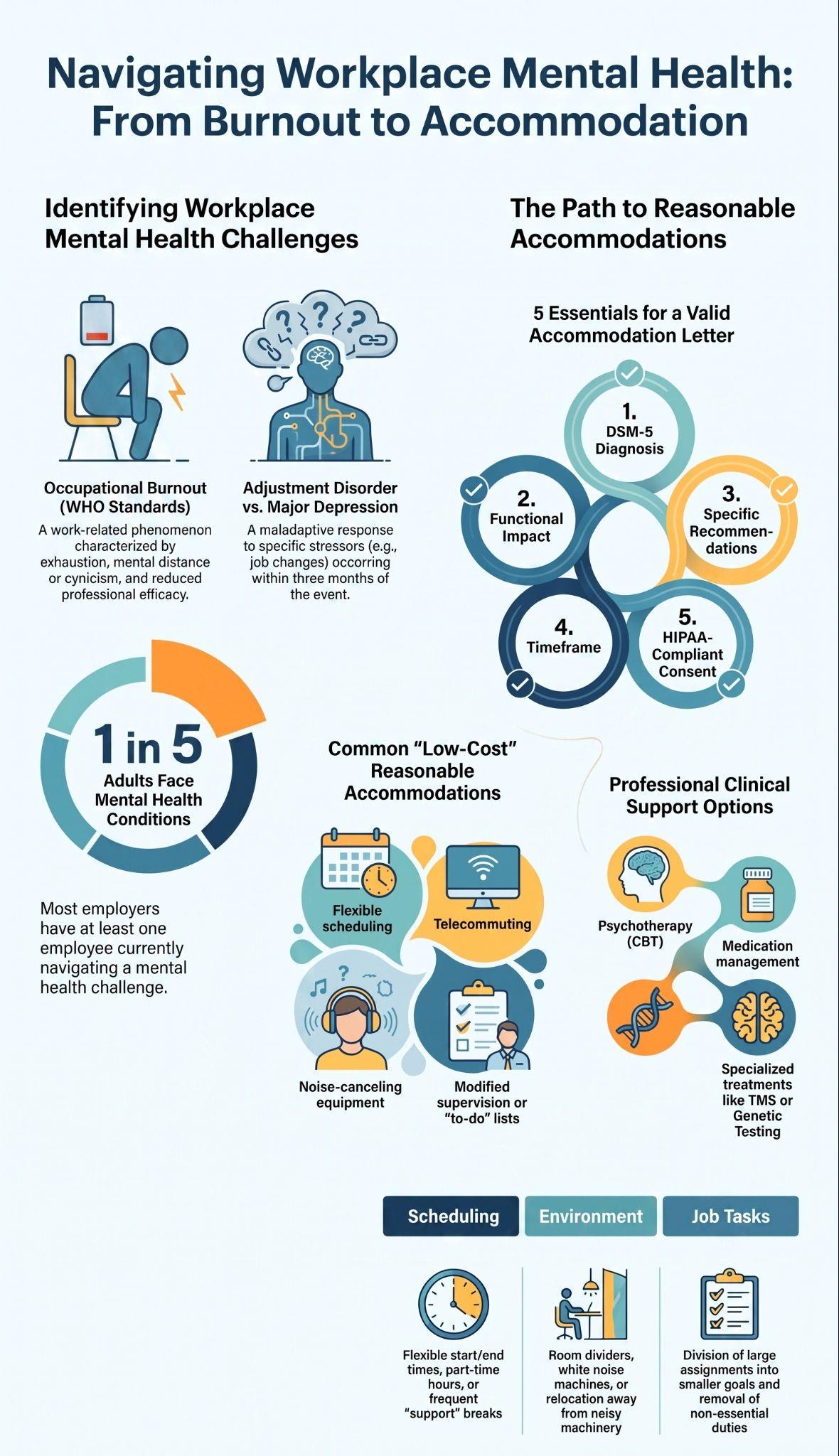
Yes. When medical findings support it, a psychiatrist may provide documentation for workplace accommodations, medical leave, or return-to-work planning.
Some employers request medical documentation when an employee asks for stress leave, reduced duties, or other workplace accommodations. A psychiatrist evaluates how symptoms affect daily functioning before making recommendations. Documentation reflects clinical findings rather than dissatisfaction with a job.
Licensed medical providers are authorized to submit formal documentation supporting reasonable workplace accommodations or medical leave for qualifying health conditions.
Depending on the patient’s condition, documentation may include:
- Medical leave recommendations
- Functional limitation reports
- Return-to-work guidance
- Accommodation recommendations
- Fitness-for-work assessments when appropriate
A psychiatrist does not decide employment policies or workplace decisions. Their role is to explain how psychiatric symptoms affect work performance and daily functioning.
Some patients also participate in:
- Employee Assistance Program (EAP) referrals
- Occupational health evaluations
- Workers’ compensation psychiatric assessments (when applicable)
- Employer-directed mental health programs
What Doesn’t a Psychiatrist Treat?
A psychiatrist treats mental health conditions. They cannot directly change workplace policies, management practices, or organizational culture.
Many people hope treatment will remove every source of work stress. Treatment can reduce anxiety, depression, insomnia, and emotional distress. It cannot eliminate problems within the workplace itself.
| Myth | Reality |
| Medication fixes toxic workplaces | Medication treats symptoms rather than organizational problems. |
| Therapy removes every source of stress | Therapy improves coping skills and resilience. |
| Psychiatrists replace Human Resources | Psychiatrists provide medical care, not employment mediation. |
| One appointment resolves burnout | Recovery typically requires ongoing treatment and workplace changes. |
Successful recovery usually combines medical treatment with practical workplace changes and healthy lifestyle habits.
- Healthier work boundaries
- Organizational support
- Improved sleep and physical health
A supportive workplace environment plays an essential role in improving employee mental well-being alongside individual clinical care.
Many people recover more successfully when psychiatric care and workplace improvements happen together.
What Do Patients Say About Psychiatric Care for Work Stress?
Many patients value psychiatrists who understand both mental health and the realities of today’s workplace. They often appreciate thoughtful evaluations more than quick solutions.
Patients frequently report better experiences when psychiatrists explain diagnoses clearly, adjust treatment plans over time, and involve them in treatment decisions. Patients often report better experiences when psychiatrists explain the diagnosis, answer questions, and adjust treatment as symptoms change instead of relying on general advice.
Common themes include:
- Feeling validated
- Receiving an accurate diagnosis
- Improved sleep
- Better emotional regulation
- More realistic workplace expectations
- Reduced guilt surrounding medical leave
- Improved communication with employers
Many people also find that medication works best when combined with psychotherapy rather than used alone.
At MedPsych Integrated, every treatment plan reflects the individual patient’s situation. Work demands, family responsibilities, medical conditions, and psychiatric history all influence treatment decisions. No two recovery plans are exactly alike.
How Can Patients Support Recovery Between Appointments?

Daily habits can strengthen treatment and support recovery. They work best alongside ongoing psychiatric care rather than replacing it.
Building healthy daily routines, such as regular physical activity, adequate sleep, stress management, and strong social connections, significantly enhances treatment outcomes.
Helpful strategies include:
- Maintaining consistent sleep schedules
- Regular aerobic exercise
- Mindfulness practice
- Structured daily routines
- Limiting after-hours work communication
- Building healthy workplace boundaries
- Maintaining supportive personal relationships
Patients participating in CBT for occupational stress often practice new coping skills between appointments. Integrating effective techniques to manage work-related stress into daily routines helps reinforce what they learn during therapy.
Recovery is usually gradual, with consistent daily habits reinforcing the benefits of psychotherapy and medication over time. Small, steady progress often leads to lasting improvement.
Why Choose MedPsych Integrated for Work-Related Stress?
Work stress can affect more than your job. It can change how you sleep, think, and feel. If that starts happening, a psychiatrist can help. At MedPsych Integrated, we take time to understand your symptoms before recommending treatment.We focus on identifying the underlying causes of symptoms instead of only treating their effects.
We care for children, adolescents, adults, and older adults in Raleigh and Cary, North Carolina. Our psychiatrists evaluate and treat anxiety disorders, depression, ADHD, bipolar disorder, OCD, adjustment disorder, and other mental health conditions. We also help people whose symptoms have become worse because of ongoing workplace stress.
Our approach includes:
- Comprehensive psychiatric evaluations
- Medication management when clinically appropriate
- Personalized treatment planning
- Telepsychiatry appointments
- Ongoing follow-up
Understanding how insurance covers psychiatry can make accessing care seamless, which is why we offer in-network coverage with Aetna and the NC State Health Plan along with no waitlist for many new patients.
No two people experience work stress in the same way. Your psychiatrist will listen to your concerns and learn about your medical history, work responsibilities, and personal goals. Your treatment plan is built around your needs and can change as you make progress.
Getting help early often leads to a smoother recovery. Treatment may reduce the effect of ongoing symptoms on your work, relationships, and daily life. Our goal is to help you feel better and support your long-term mental health.
Moving Forward With Work-Related Stress Treatment
If you’re still wondering can a psychiatrist treat work-related stress, the answer is yes. Early psychiatric assessment helps identify underlying conditions and guides effective treatment, it’s time to take it seriously. Early psychiatric evaluation improves the likelihood of symptom recovery and helps prevent work-related mental health conditions from worsening and help you regain control of your daily life.
If you’re ready to take the next step, MedPsych Integrated offers comprehensive psychiatric evaluations and personalized treatment for work-related stress and other mental health concerns. Learn more or schedule an appointment at MedPsych.
FAQ
Can a psychiatrist write documentation for stress leave or workers compensation claims?
Yes. Psychiatrists conduct formal psychiatric assessments and document work-related mental health conditions. They can provide clinical opinions that support stress leave, workers compensation claims, or return-to-work planning.
This documentation carries clinical weight because it comes from a licensed physician. If your situation involves workplace bullying, work trauma, or occupational burnout, a psychiatrist can assess the impact and put it on record.
What is the difference between a psychiatrist and a psychologist for workplace stress?
A psychiatrist is a medical doctor. They can diagnose mental health conditions, prescribe medication, and provide psychotherapy. A psychologist focuses on therapy and psychological testing but cannot prescribe medication in most settings.
For work-related stress involving significant depression, anxiety, or adjustment disorder, a psychiatrist can manage both medication and therapy. They can also coordinate with a psychologist for combined treatment when needed.
When does work-related stress become a diagnosable psychiatric condition?
Work stress becomes a clinical condition when it causes significant functional impairment. That means it affects your sleep, concentration, relationships, or ability to do your job.
Common diagnoses include adjustment disorder, work-related depression, work-related anxiety, and workplace PTSD. A psychiatric assessment identifies whether your symptoms meet diagnostic criteria. It also determines whether treatment should involve therapy, medication, or a structured return-to-work plan.
What types of therapy does a psychiatrist use for occupational stress?
Psychiatrists use several evidence-based approaches for occupational stress. Cognitive behavioral therapy targets unhelpful thought patterns tied to job strain or work overload. Interpersonal psychotherapy addresses work-family conflict and role conflict.
Mindfulness-based approaches build stress resilience over time. Schema therapy may be used when workplace stress has activated deeper psychological patterns. The right approach depends on your diagnosis and what is driving your symptoms.
Can a psychiatrist help if my stress is caused by harassment or a toxic workplace?
Yes. A psychiatrist can assess and treat the mental health impact of workplace bullying, harassment, or a toxic environment, even when the external situation has not changed. Treatment focuses on managing your symptoms and building coping strategies.
If legal or occupational health processes are involved, a psychiatrist can also document clinical findings to support those processes. They can coordinate with employee assistance programs or occupational medicine teams when broader workplace intervention is needed.
References
- https://www.who.int/news/item/28-05-2019-burn-out-an-occupational-phenomenon-international-classification-of-diseases
- https://www.apa.org/ptsd-guideline/treatments/cognitive-behavioral-therapy
Related Articles
- https://medpsychnc.com/techniques-to-manage-work-related-stress/
- https://medpsychnc.com/does-insurance-cover-psychiatry/
- https://medpsychnc.com/how-a-psychiatrist-can-help-with-mental-health/