

When should a teen see a psychiatrist? Adolescents can experience a wide range of emotional and behavioral changes, but some patterns may signal a mental health concern.
Signs such as persistent mood swings, withdrawal from friends or family, distorted thinking, or risky behaviors that affect school or relationships indicate the need for professional evaluation.
Early assessment allows timely support through therapy, medication management, or coordinated care, reducing the risk of crisis and promoting healthy development. Keep reading to learn how to identify and respond to these warning signs effectively.
Key Takeaways
- Duration, severity, and functional impairment guide the decision for psychiatric referral.
- Immediate intervention is essential for self-harm, suicidal thoughts, or severe aggression.
- Psychiatrists manage clinical disorders and medications, complementing therapy for holistic adolescent care.
Recognizing Critical Behavioral Signs That Require a Psychiatrist
Persistent extreme emotions, social or academic withdrawal, distorted perceptions, or physical regression indicate the need for a psychiatric evaluation. Frequency and intensity are more clinically significant than occasional mood swings.
Adolescents exhibiting dramatic mood changes or functional decline over more than two weeks should be evaluated. Observation of school performance, peer interactions, and family communication provides measurable indicators of impairment, a key focus in Psychiatrist Raleigh and Cary NC.
“Adolescence is a critical period for neurodevelopment, when over half of all lifetime psychiatric disorders begin, research on adolescents suggests that contact with mental health professionals has preventive effects against psychiatric disorders and is cost‑effective.” – Capturing Adolescents in Need of Psychiatric Care with Psychopathological Symptoms, European Psychiatry.
Emotional Instability
Some teens may rage for no obvious reason. Others might cry, panic, or remain sad for long periods. When these moods persist for more than 2 weeks and interfere with daily functioning, professional evaluation is warranted, as addressed by Adolescent Psychiatry.
True emotional instability alters a teenager’s entire baseline behavior, causing them to appear completely unrecognizable from one day to the next.
This severe shift routinely derails daily habits, leading to abandoned homework assignments, explosive arguments during family dinners, and total isolation from close childhood friends. These signs are persistent, intense, and measurable.
Social and Academic Withdrawal
A teen dropping activities or avoiding friends may seem subtle at first. Then grades slip, interest wanes, and isolation deepens. This is not laziness. It shows something underlying. Social withdrawal often signals emotional distress. Academic decline confirms it. When both appear, professional evaluation is needed.
Distorted Thinking and Perceptions

Distorted thinking often shows up in subtle, everyday habits before a major crisis occurs.
A teen might suddenly cover their bedroom webcam with tape out of paranoia, refuse to look in mirrors due to a severely warped body image, or insist they hear whispering when the house is completely quiet, all of which may signal Signs of Mental Health Issues.
These real-world distortions destroy a teenager’s ability to focus on homework or maintain normal group chats with peers. They interfere with concentration, friendships, and daily functioning. Repeated distortions should not be ignored. Early psychiatric assessment can prevent escalation.
Physical or Regression Signs
Noticeable changes in sleep, sudden weight gain or loss, or poor hygiene are meaningful. They often appear with emotional and behavioral changes. Teens may sleep too much or too little. Their appearance may decline. Habits regress. These signs lasting more than two weeks indicate deeper problems.
When Behavioral Shifts Signal Risk

Isolation from peers or disengagement in school is concerning. Aggression, risk-taking, or sudden changes in routine are warning signs. These behaviors often indicate that daily functioning is impaired. Counseling alone may not suffice. A psychiatric evaluation should follow.
Immediate Intervention Is Required When a Teen Shows Crisis Behaviors
Self-harm, suicidal thoughts, severe substance use, or violent aggression demand urgent attention. Immediate assessment saves lives. Delays increase risk.
“Referral for psychiatric assessment should be considered when there is concern for psychotic features, severe functional impairment, suicidal behavior, or treatment nonresponse severe comorbid symptoms require specialized evaluation.” – Diagnosis and Management of Depression in Adolescents, PMC.
Red-Flag Symptoms
- Cuts, burns, or other forms of self-injury
- Statements about wanting to die or giving away prized possessions
- Using substances to cope with emotions
- Explosive or violent behavior toward others or property
Emergency Steps for Parents
Contact crisis hotlines or bring your teen to the nearest emergency department. Inform school counselors or the primary care provider. Do not leave the teen alone if high-risk behaviors are present. Quick action is essential.
Psychiatrists Are Needed When Therapy Alone Cannot Address Clinical Disorders

Therapists provide coping skills and support. They teach strategies for stress and social challenges. But therapy cannot fix conditions with biological factors. Persistent, severe, or worsening symptoms need psychiatric evaluation.
Medication may be necessary. Clinical management ensures safety and improvement, as offered by Adolescent and Teen ADHD Treatment.
Indicators for Psychiatric Referral
- Symptoms that worsen despite therapy
- Severe mood swings or hallucinations
- Functional impairment at home, school, or with peers
- Inability to engage meaningfully in therapy sessions
Combining therapy with psychiatric care addresses both behavior and biology. Teens receive treatment for symptoms and guidance to cope.
Key Behavioral Warning Signs Table
| Behavioral Category | Indicators | Duration / Severity |
| Emotional Instability | Frequent rage, panic attacks, persistent low mood | More than 2–3 weeks, interfering with daily life |
| Social and Academic Withdrawal | Dropping activities, isolating from friends, sudden grade decline | Rapid onset, persistent |
| Distorted Thinking and Perceptions | Paranoia, hallucinations, distorted body image | Frequent, affecting social interaction |
| Physical or Regression Signs | Weight changes, sleep problems, hygiene neglect | Noticeable, lasting more than two weeks |
Psychiatric Conditions in Teens That Require Medical Evaluation
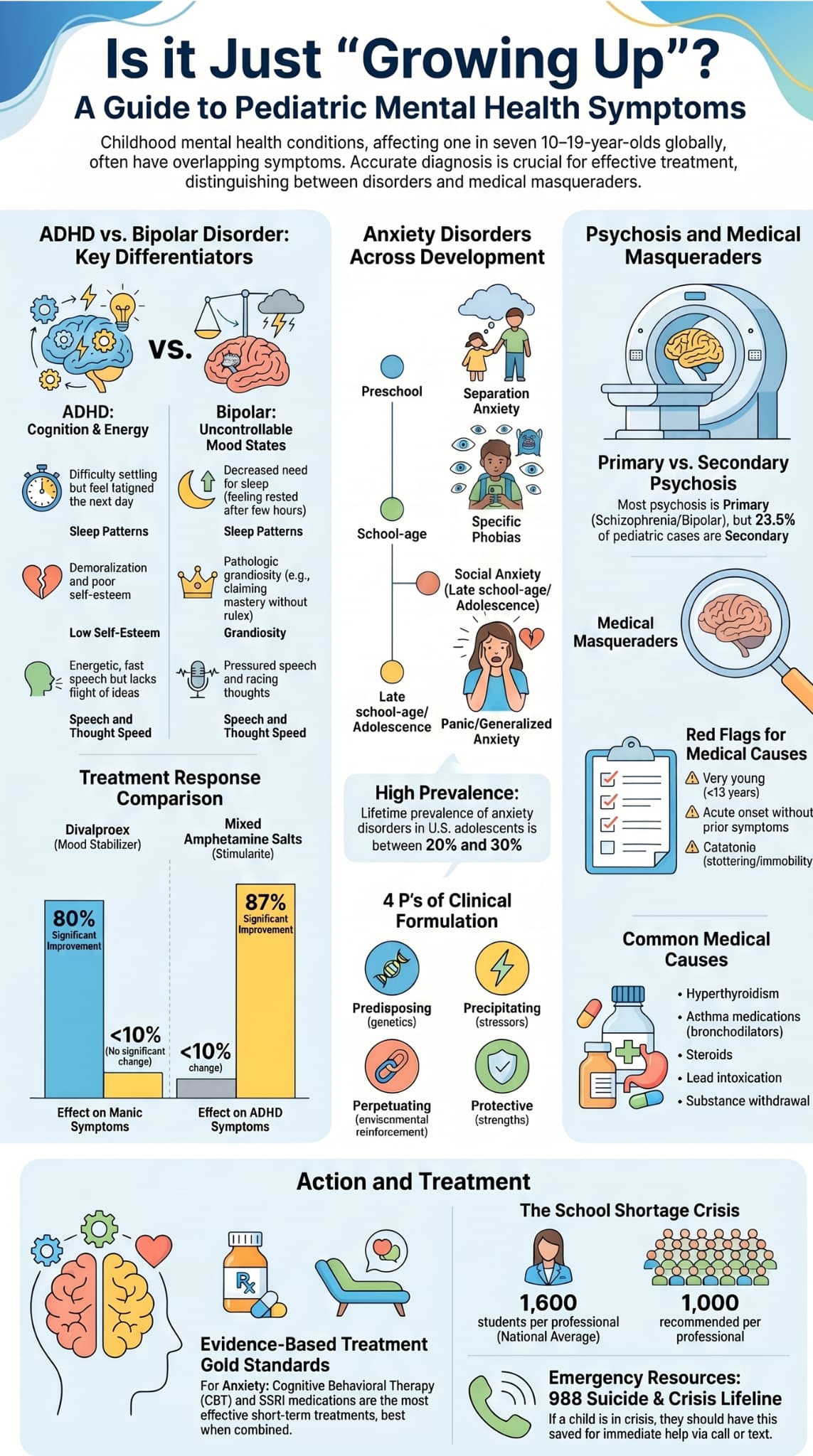
Psychiatrists address depression, bipolar disorder, anxiety, obsessive-compulsive disorder, ADHD, eating disorders, and early psychosis. Conditions with biological causes require evaluation.
Early recognition prevents complications. These may include school failure, social isolation, or self-harm.
Conditions to Monitor Closely
- Major depressive episodes affecting daily life
- Bipolar mood swings disrupting academics or social engagement
- Severe anxiety or panic
- Eating disorders with health risks
- ADHD causing functional impairment
- Early-onset psychosis or hallucinations
Preparing for an Accurate Evaluation
Documentation is essential. Note frequency, intensity, and triggers. Track school performance, social engagement, and sleep patterns. Include therapy notes. Every detail helps the psychiatrist understand the situation.
Preparing Teens and Families for Psychiatric Evaluation
A full evaluation lasts one to two hours. It uses questionnaires, developmental history, and parental input.
Intake Essentials
Collect medical, developmental, and school records. Complete symptom questionnaires. Record recent behavioral changes or crisis events.
Family Involvement
Provide context, not pressure. Focus on daily functioning rather than mood description. Family input ensures a complete, accurate evaluation.
Combining Psychiatric Care With Therapy Produces Better Outcomes
Medication and clinical management from a psychiatrist work best alongside therapy for coping and cognitive skills. This integrated approach improves safety, symptom tracking, and functional recovery.
Coordinated Care Model
The psychiatrist manages biology and medication. The therapist supports coping and cognitive reframing. Communication between providers optimizes care.
Monitoring and Follow-Up
Track symptoms using functional scales. Adjust medications gradually to reduce side effects. Maintain therapy to reinforce positive behaviors.
Therapist vs Psychiatrist Roles Table
| Professional | Focus | Treatment Role |
| Therapist / Counselor | Behavioral coping, talk therapy | Teach coping skills, address life stressors |
| Psychiatrist | Clinical disorders, biological factors | Diagnosis, medication, complex evaluation |
Understand What’s Affecting Your Teen
Watching your teen struggle with school stress, sleep problems, or family tension can be exhausting, and it’s easy to wonder if something more serious is going on. The reality is, environmental factors often mimic psychiatric conditions, and missing them can delay proper support.
MedPsychNC helps parents separate situational stress from clinical concerns and guides timely care. Their licensed psychiatrists provide teen telepsychiatry, medication management, and personalized treatment plans, so you can take action confidently and support your teen without guesswork.
FAQs
What are the main warning signs that a teen needs psychiatric help?
Parents should watch for sudden personality changes, chronic sadness, hopelessness, self-isolation, or severe anxiety in teens.
Teen behavioral changes such as school refusal, social withdrawal, emotional outbursts, or risky behavior may also indicate the need for adolescent mental health care. Early recognition allows families to schedule a psychiatric evaluation for teens and access timely teen mental health help.
When should parents seek an adolescent psychiatrist for mood or anxiety disorders?
When persistent sadness or uncontrollable panic attacks begin to paralyze a teenager’s daily routine, a diagnostic evaluation becomes necessary. A child psychiatrist evaluates whether these struggles stem from temporary situational stress or an underlying biological imbalance, allowing families to safely coordinate talk therapy alongside precise medical management.
How can behavioral changes or school issues indicate the need for psychiatric care?
Behavioral signs such as a drop in school performance, school refusal, attention problems, or obsessive behaviors may reflect underlying teen mental illness.
Emotional instability, anger issues, or compulsive behaviors can also signal adolescent behavioral health concerns. Timely teen mental health screening and professional psychiatric help for teens can prevent these challenges from worsening.
When should self-harm or substance use in teens trigger professional intervention?
Self-harm warning signs, suicidal thoughts, self-destructive behaviors, or substance use require urgent attention from an adolescent psychiatrist. High-risk behavior, grief, PTSD, or trauma symptoms in teens also warrant early intervention.
Scheduling a psychiatric referral ensures a comprehensive teen psychological assessment, crisis intervention, and therapy for adolescents to support safety and well-being.
How do parents know when emotional or developmental concerns need psychiatric evaluation?
Parents should seek help when teens display emotional outbursts, excessive stress, coping difficulties, poor hygiene, or loss of interest in activities. Eating disorders, sudden personality changes, or panic symptoms are additional warning signs.
Early adolescent mental health care and teen psychiatry appointments provide evaluation, support, and treatment to address emotional, behavioral, and developmental concerns effectively.
References
- https://pmc.ncbi.nlm.nih.gov/articles/PMC8727710/
- https://pmc.ncbi.nlm.nih.gov/articles/PMC10228578/
Related Articles
- https://medpsychnc.com/services/adolescent-psychiatry/
- https://medpsychnc.com/services/adolescent-adhd-treatment/
- https://medpsychnc.com/
- https://medpsychnc.com/signs-of-mental-health-issues/