

To control bipolar mood swings, you need a combination of prescribed medication, therapy, and consistent daily routines. Bipolar disorder is a lifelong medical condition, but the right clinical treatment plan reduces symptom severity and restores emotional balance. If you notice sudden shifts in your energy, sleep, or mood, seeking professional help is your best next step. Contact MedPsych Integrated today to schedule an evaluation and start your personalized care plan.
Key Takeaways
- Integrated Medical Treatment: Managing bipolar disorder requires a combination of prescribed medication, such as FDA-cleared mood stabilizers or antipsychotics, and psychotherapy.
- Routine and Mood Tracking: Maintaining consistent sleep-wake cycles and charting daily mood patterns are critical for identifying early warning signs before severe manic or depressive episodes occur.
- Professional Guidance: Never stop or adjust medications independently. Always work with a clinician, and utilize crisis resources like the 988 Lifeline during severe symptom escalations.
What Is the Most Effective Bipolar Treatment?
The most effective bipolar treatment combines medical management, therapy, and lifestyle adjustments. Leading medical guidelines from institutions like the Mayo Clinic emphasize that prescribed medication and targeted psychotherapy form the foundation of safe bipolar care.
Bipolar disorder causes distinct manic, hypomanic, depressive, or mixed episodes. The right approach depends on your unique symptoms, medical history, and treatment response. Most care plans include mood stabilizers or targeted antipsychotic medications.
Psychotherapy, such as cognitive behavioral therapy, helps you identify personal triggers. Reviewing the common symptoms of bipolar disorder, from racing thoughts to heavy depressive fatigue, allows you to recognize changes early and seek timely support.
Consistent sleep, regular meals, and stable social rhythms protect your emotional stability. Daily mood tracking helps you spot warning signs before an episode escalates. Meanwhile, stress management techniques give you practical coping tools for difficult days.
Treatment aims to manage symptoms rather than cure the condition, as bipolar disorder has no known cure. Long-term care focuses on reducing how often episodes occur and how severe they become. A professional evaluation can also rule out other conditions that cause similar mood shifts.
Why Does Medication Adherence Matter to Control Bipolar Mood Swings?
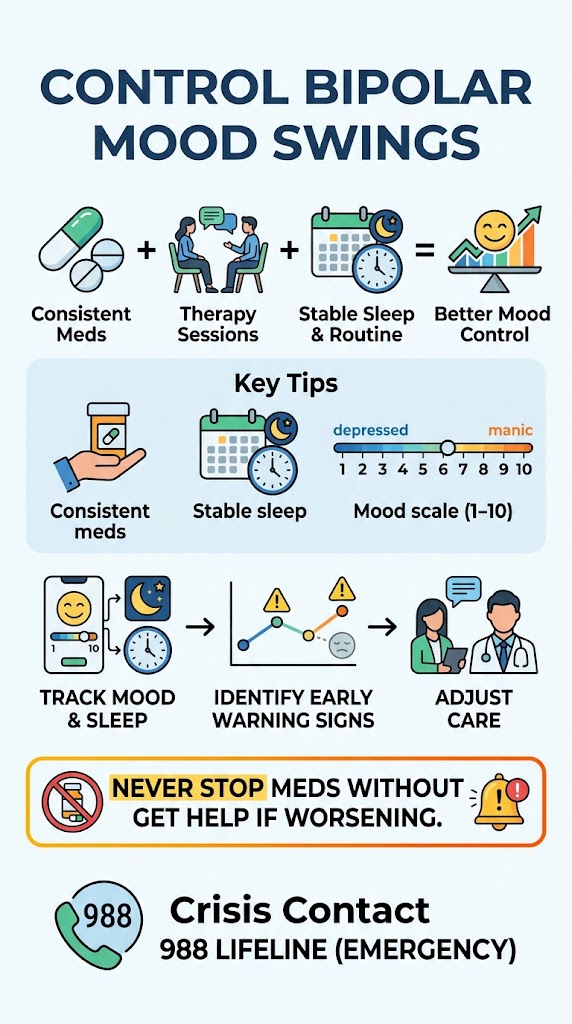
Taking your medication consistently is essential for long-term emotional stability. A clinician ensures your prescribed drugs manage symptoms effectively with manageable side effects.
According to the Annals of General Psychiatry,
“Non-adherence in patients with bipolar disorder results in symptoms, such as aggravation, bipolar disorder recurrence, emergency room visits, re-hospitalization, and poor psychosocial outcomes.” – Annals of General Psychiatry.
Mood stabilizers and atypical antipsychotics remain the most effective FDA-cleared choices. Lithium, valproate, divalproex, carbamazepine, and lamotrigine each work through different brain mechanisms. Finding comprehensive bipolar treatment in Raleigh involves working with an experienced psychiatrist who understands your medical history.
Adjusting medication requires patience. Mayo Clinic (2026) explains that some psychiatric drugs take several weeks to show their full effect. Routine blood work and lab tests may also be necessary to monitor your overall health safely.
Never alter doses or stop taking medication independently. If you experience severe side effects, worsening mood, or sleep changes, contact your provider immediately.
Your doctor can adjust dosages, switch medications, or check for drug interactions safely. A complete medication review evaluates all prescriptions, over-the-counter products, and supplements you use.
How Can a Routine Manage Bipolar Mood Swings?

A predictable daily schedule supports your body clock and reduces physical and emotional stress. Clinical practices like interpersonal and social rhythm therapy focus specifically on stabilizing daily sleep, wake, and meal patterns to manage symptoms effectively.
Focus on maintaining a realistic sleep schedule rather than aiming for perfection. Most adults need 7 to 9 hours of quality sleep each night. Keep your bedtime and wake-up times consistent every day.
Research published by the American Psychiatric Association,
“Sleep disturbance is not merely a symptom of bipolar disorder, but a primary driver of mood episode recurrence and illness severity.” – American Psychiatric Association.
Regular meals, moderate exercise, planned medication times, and social connection build essential daily structure. Bipolar mania often reduces the feeling of needing sleep, while bipolar depression makes basic tasks feel exhausting. Having a familiar routine removes extra effort during these challenging states.
Set simple goals for sleeping, eating, moving, and taking medication. A flexible routine builds sustainable habits without creating extra anxiety or pressure.
If your sleep drops suddenly while your energy or irritability rises, contact your psychiatric provider right away. A stable routine also lowers decision fatigue. Having preset daily habits saves mental energy for complex work, financial, or relationship choices.
Structure serves as an anchor during depressive phases when motivation is low. During manic or hypomanic states, consistent habits serve as guardrails against risky, impulsive choices.
What Should You Track to Recognize Mood Changes Early?
Daily mood tracking highlights sleep shifts, stress levels, medication patterns, and energy changes before severe episodes develop. Psychiatrists widely recommend daily mood charting as a practical tool for long-term treatment planning and symptom prevention.
Tracking your mood does not need to be complex or time-consuming. Recording basic daily metrics helps your clinician spot trends during routine appointments. Understanding What Happens During a Psychiatric Evaluation can help you share these recorded insights effectively. Rate your overall mood on a scale from 1 to 10 and note major emotional shifts.
Log total sleep hours, sleep quality, and medication adherence daily. Record major stressful events, energy shifts, spending changes, or social adjustments. Using a structured layout makes it easier to review patterns with your clinician during appointments:
| Tracking Metric | What to Record | Why It Matters |
| Mood Score | Scale from 1 (severe depression) to 10 (extreme mania) | Identifies baseline stability and sudden emotional shifts early |
| Sleep Duration & Quality | Hours slept, bed/wake times, and restfulness | Sleep changes are primary triggers for manic or depressive episodes |
| Medication Adherence | Dosage taken and exact time (Yes/No/Late) | Ensures consistent blood levels and helps evaluate true efficacy |
| Triggers & Events | High stress, conflict, alcohol use, or routine changes | Connects external stressors to specific mood reactions |
Simple paper journals or specialized tracking apps like eMoods work well for gathering data. Daily records help your care team identify personal triggers and early warning signs of a relapse. Over time, patterns become clear, you may notice that two consecutive nights of poor sleep consistently trigger irritability or depressive slumps.
These patterns form an early-warning system that alerts you and your doctor to adjust treatment early. Early data on sleep loss, withdrawal, or sudden energy spikes allows for quick care adjustments.
How Do You Respond When Mania Affects Decision-Making?

Postponing major life decisions and involving trusted support reduces the impact of poor judgment during mood shifts. Reach out to your clinician immediately if your sleep, behavior, or energy levels change rapidly.
Avoid making sudden financial, career, legal, or relationship choices during high-energy or impulsive phases. During severe depression, let a family member or friend help you schedule appointments and communicate with your treatment team.
Never stop treatment just because you feel well or want to try alternative methods without guidance. Long-term adherence remains the most reliable way to maintain health and stability.
Build a support network of supportive family members, close friends, therapists, and doctors. Choose people who communicate calmly and respectfully during stressful times. You can ask trusted individuals to watch for changes in your speech, spending, or sleeping habits.
Pausing major choices for 48 to 72 hours gives your treatment team time to help you adjust. A written crisis plan created during stable periods outlines key contacts, emergency steps, and financial or personal guardrails.
Having a clear plan removes guesswork during a crisis and ensures your support team acts effectively. Share this document with your family, therapist, and psychiatrist. If you face immediate danger or suicidal thoughts, call or text the 988 Suicide & Crisis Lifeline at 988, or call 911 immediately.
How MedPsych Integrated Supports You to Control Bipolar Mood Swings
Learning to control bipolar mood swings requires compassionate medical expertise, comprehensive evaluations, and continuous clinical support. A personalized care plan makes treatment more manageable, and the right support matters.
MedPsych Integrated offers personalized outpatient psychiatric care in Raleigh and Cary, NC, with evaluations, medication management, therapy support, and telepsychiatry options. If you’re looking for reliable bipolar care with flexible appointment options, MedPsych Integrated can help you take the next step. Contact the team today to schedule a consultation and discuss your care needs.
FAQ
Can lifestyle changes alone control bipolar mood swings?
Can lifestyle changes alone control bipolar mood swings?
Lifestyle changes alone cannot stabilize this condition because bipolar disorder is a biological medical condition that requires clinical intervention. However, maintaining consistent sleep schedules, engaging in regular physical exercise, and practicing daily stress management significantly support your overall medical treatment plan.
How quickly can bipolar medication improve mood symptoms?
The timeline for bipolar medication to improve symptoms varies based on the specific drug class, prescribed dosage, and individual metabolic response. Patients typically begin seeing initial mood stabilization within two to six weeks, though finding the most effective medication strategy requires careful clinician monitoring and gradual dosage adjustments.
Can sleep loss trigger bipolar mood changes?
Yes, sleep loss acts as a primary physiological trigger for bipolar mood instability. Disrupted sleep patterns or severe sleep deprivation can directly precipitate manic, hypomanic, or depressive episodes, making a consistent sleep-wake schedule essential for safe illness management.
Should you stop bipolar medication when you feel better?
You should never stop taking bipolar medication or adjust your dosage without direct consultation with your prescribing doctor. The National Institute of Mental Health warns that discontinuing medication, even during periods of stability, frequently causes a severe recurrence of manic or depressive symptoms.
When should you seek urgent help for bipolar symptoms?
You must seek immediate emergency medical care if you experience severe symptoms, including thoughts of self-harm, suicidal ideation, or loss of contact with reality. If you or a loved one are in immediate danger, call or text the Suicide & Crisis Lifeline at 988, or call 911 immediately.
References
- https://link.springer.com/article/10.1186/s12991-022-00411-4
- https://psychiatryonline.org/doi/10.1176/appi.pn.2023.01.1.28
Related Articles
- https://medpsychnc.com/understanding-the-symptoms-of-bipolar-disorder-in-psychiatry/
- https://medpsychnc.com/conditions-treated/bipolar-disorder/
- https://medpsychnc.com/what-happens-during-a-psychiatric-evaluation/