

A psychiatrist for employees provides medical assessment and treatment for mental health conditions that can affect daily life and work. These conditions may include depression, anxiety disorders, bipolar disorder, and ADHD. Psychiatric care can help employees understand their symptoms and find suitable treatment.
It may also help them manage daily responsibilities when mental health challenges affect their work. The type of care needed depends on each person’s condition and concerns.
Key Takeaway
- Clinical care: Psychiatrists diagnose conditions and manage treatment and medication.
- Access and cost: EAPs, insurance, and virtual visits can improve access to care.
- Privacy and support: Keep medical information confidential and separate from routine workplace decisions.
What Does a Workplace Mental Health Specialist Do?
A psychiatrist is a medical doctor who specializes in mental health. Part of the job involves asking questions about symptoms, medical history, sleep, and everyday life. During a psychiatric evaluation, these details help the doctor understand what may be happening and decide what care might help.
Treatment varies. A psychiatrist may prescribe medication, monitor its effects, or suggest therapy with another professional. Some people need ongoing appointments. Others may need an assessment and advice about the next step.
This is different from a workplace wellness activity, such as a stress management session. Those activities can offer general support, but they do not replace a medical assessment when symptoms need closer attention.
When Might an Employee Need a Psychiatrist?
A difficult week at work does not automatically mean someone needs psychiatric treatment. But when symptoms continue or start affecting daily life, speaking with a professional may be useful.
For example, an employee might find it hard to sleep for several weeks, feel anxious most days, or struggle to concentrate on familiar tasks. These problems can have different causes, so guessing is not enough.
An employee may consider an assessment when they experience:
- Low mood or anxiety that does not improve.
- Repeated panic attacks or strong feelings of fear.
- Ongoing problems with attention or impulse control.
- Major changes in mood, energy, or sleep.
- Questions about starting medication or reviewing a current prescription.
None of these symptoms confirms a diagnosis by itself. Physical health problems, stress, and medication side effects can cause similar changes. A psychiatrist considers the person’s history and symptoms before recommending treatment.
How Can Employers Provide Psychiatric Services to Employees?
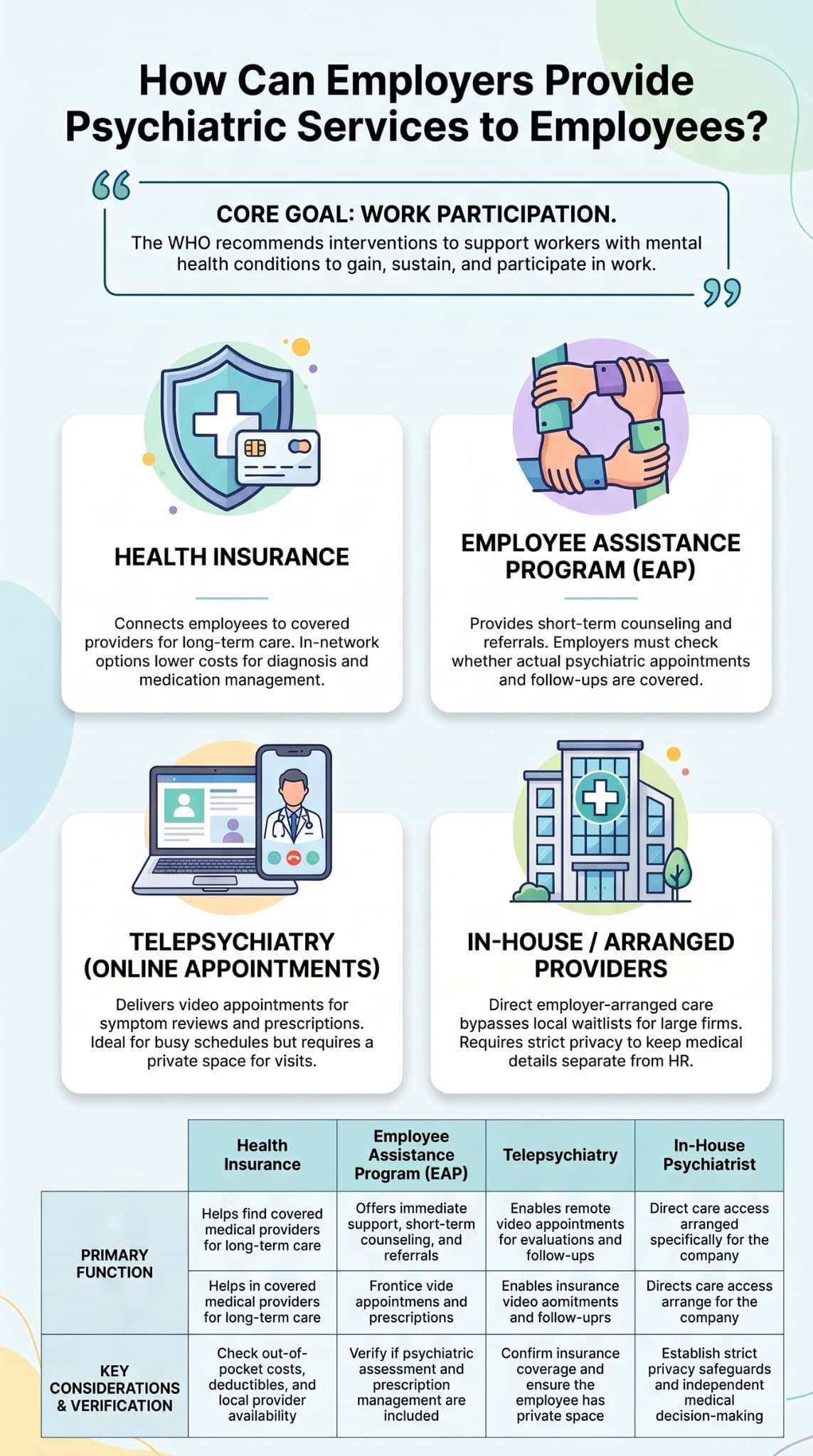
Employees may find care through their health insurance, an Employee Assistance Program, online appointments, or a provider arranged by their employer. Each route works a little differently, so it helps to know what is actually included.
“WHO recommends three interventions to support workers with mental health conditions gain, sustain and participate in work.” – World Health Organization
Can Employees Access a Psychiatrist Through an EAP?
An Employee Assistance Program, often called an EAP, gives employees a way to seek support for personal or work-related concerns. Many programs offer short-term counseling and referrals to other professionals.
Some EAPs include psychiatric appointments. Others do not. An employee may receive help finding a psychiatrist but need to use health insurance or pay separately for the appointment.
It is worth asking what the program covers before booking. Check whether the service includes a psychiatric assessment, medication management, and follow-up visits.
An EAP can help someone work out where to start. Still, if symptoms require medical treatment over time, short-term counseling or a referral may not be enough on its own.
Is Telepsychiatry a Good Option for Employees?
Getting to a clinic can be difficult when someone works long hours or lives far from a psychiatrist. An online appointment may save that trip. Employees looking for a psychiatrist in Raleigh, NC may also want to ask whether virtual appointments are available. The employee can speak with the doctor by video instead.
These visits can be used to talk about symptoms, discuss medication, or review how treatment is going. Still, a video call cannot replace every type of appointment. A doctor may need to see the patient in person, depending on the symptoms and the assessment needed.
There is one other point to consider. Employees need a private place to talk openly. Before booking, they should check whether online care fits their situation and whether their insurance will pay for the visit.
Should Companies Hire an In House Psychiatrist?
For a large company, having an on-site clinical provider available through work might make care easier to reach.
Employees may have less trouble arranging an appointment, especially if local services have long waiting lists.
But bringing psychiatric care into the workplace needs careful planning. Employees should be able to speak honestly with the doctor without worrying that their manager will learn the details. The psychiatrist must make decisions based on the patient’s health, not the company’s business goals.
Hiring a psychiatrist is also a major expense. Some employers may get more value from offering health insurance and an Employee Assistance Program (EAP) instead. There is no single arrangement that works for every company.
| Service Model | How It Works | What to Check |
| EAP | Offers support and referrals | Whether psychiatric care is included |
| Health Insurance | Helps employees find covered providers | Costs and appointment availability |
| Telepsychiatry | Allows appointments by video | Whether online care meets the patient’s needs |
| In House Psychiatrist | Makes psychiatric care available through the employer | Privacy and independent medical decisions |
What Conditions Can a Psychiatrist for Employees Treat?

Employees may seek psychiatric care for many reasons. One person may feel low for weeks and struggle to get through the workday. Another may have trouble sleeping or find it hard to control persistent worry.
A psychiatrist looks at the symptoms and the person’s medical history to understand what may be happening. Several mental health conditions can affect daily life and work, including anxiety, depression, bipolar disorder, ADHD, and OCD.
Can a Psychiatrist Help Employees With Depression and Anxiety?
Yes. Psychiatrists assess depression, anxiety disorders, and panic disorder. They may ask when the symptoms began, how often they occur, and whether they affect sleep, work, or relationships.
There is no single treatment for everyone. Some patients take medication. Others may benefit from therapy, or from using both approaches. When medication is part of the plan, the psychiatrist checks how the patient responds and whether side effects occur. The treatment may need to change over time.
Feeling nervous before a presentation does not, by itself, mean someone has an anxiety disorder. Feeling sad after a loss does not automatically mean depression either. The doctor needs to look at the full picture, including how long the symptoms last and how much they interfere with daily life.
Can Employees Seek Psychiatric Care for ADHD or Bipolar Disorder?
Yes. A psychiatrist can assess ADHD and bipolar disorder, although the signs of these conditions are different.
An employee with ADHD may lose track of tasks, forget appointments, or struggle to organize their workload. These difficulties can affect work, but they can also have other causes. A diagnosis requires more than a few missed deadlines.
Bipolar disorder involves changes in mood that include depressive episodes and periods of unusually elevated or irritable mood. During an elevated episode, someone may sleep very little, feel unusually energetic, or act in ways that are out of character.
The psychiatrist will ask about the person’s experiences over time, not just what happened on one difficult day. Other possible causes also need to be considered. Once the assessment is complete, the doctor can discuss treatment options and whether regular follow-up is needed.
Is Psychiatric Care for Employees Confidential?

Some employees keep their struggles to themselves because they are unsure what their employer might find out. That concern is worth addressing before care begins.
“With limited exceptions, you must keep confidential any medical information you learn about an applicant or employee.” – U.S. Equal Employment Opportunity Commission
Employees can ask the provider how medical records are protected and whether information will be shared with anyone outside the care team. The answer may depend on the service being used and the situation.
Can Employers Access an Employee’s Psychiatric Diagnosis?
An employer does not automatically receive an employee’s diagnosis or treatment notes just because the company offers mental health benefits.
In the United States, HIPAA protects certain health information held by covered healthcare providers and other covered entities. However, it does not apply to every workplace record or every health program. Other laws may affect how medical information is handled, too.
The details matter. An employee receiving treatment from a private psychiatrist may be in a different situation from someone completing a medical assessment for a workplace request. Employees should ask what information may be shared before providing records.
What Information Might HR Need?
HR may ask for medical documentation when an employee requests a workplace adjustment or qualifying leave. The employer may need to understand which job duties are affected and whether a change is needed.
That does not necessarily mean HR needs the full treatment history. The information required depends on the request and the laws that apply.
Employees can ask who will review their documents and how the records will be kept. If the company asks for a work fitness assessment, they should also find out what the assessment is meant to determine.
These assessments serve a different purpose from regular psychiatric care. A work fitness assessment looks at a particular question about job duties. A psychiatric appointment focuses on the patient’s symptoms, health, and treatment.
Getting the Right Support for Your Mental Health Needs
Finding the right mental health care can feel overwhelming, especially when you are unsure where to start. Working with a qualified psychiatrist for employees helps you access personalized evaluations and build an effective treatment plan to manage your symptoms.
MedPsych Integrated offers psychiatric evaluations and medication management for depression, anxiety, bipolar disorder, ADHD, and OCD in Raleigh and Cary, North Carolina. With flexible appointments, including telepsychiatry, children, adults, and seniors can explore care that fits their needs. Contact MedPsych Integrated to ask about available services, insurance coverage, and appointment options.
FAQs
Can I See a Psychiatrist Through My Employer Without Telling My Manager?
Yes. Employees can often access psychiatric care through their health insurance or employee assistance program (EAP) without informing their manager. However, confidentiality rules depend on the service and circumstances. Employers generally do not receive details about private treatment unless disclosure is permitted or legally required. Before booking an appointment, employees can ask the provider how medical records are stored and who can access them.
What Is the Difference Between an EAP Psychiatrist and an EAP Counselor?
An EAP counselor typically provides short-term support for concerns such as workplace stress, grief, and personal problems. A psychiatrist can assess mental health conditions, diagnose psychiatric disorders, and prescribe medication when appropriate. Some EAPs do not provide direct access to psychiatrists but can refer employees to outside providers. Employees should check which services their EAP covers and whether follow-up appointments involve additional costs.
Will My Employer Cover Visits to a Psychiatrist for Employees if Insurance Denies It?
Not necessarily. Some employers offer mental health benefits through health insurance, an employee assistance program, or other workplace mental health services. However, these benefits may cover different services and have specific limits. Employees should ask HR about available benefits and confirm the costs directly with the provider before booking an appointment. Employer support does not automatically mean that all psychiatric treatment expenses will be covered.
Can a Psychiatrist Help Me Return to Work After Mental Health Leave?
Yes. A psychiatrist can assess an employee’s symptoms, treatment progress, and support needs during the return to work process. A psychiatric evaluation may help identify appropriate workplace adjustments, but it does not automatically determine whether an employee can return to work. Employees can discuss possible accommodations with their clinician and HR. They should also clarify what medical information must be shared and how the employer will protect its confidentiality.
Should I Choose an In-Network Psychiatrist or Pay for an Out-of-Network Provider?
An in-network psychiatrist usually costs less because the provider has agreed to the insurer’s payment rates. An out-of-network psychiatrist may offer different appointment options, but the employee may have to pay more out of pocket. Before choosing a provider, employees should check their deductible, copayment, referral requirements, and coverage for psychiatric medication management. They should also ask the provider’s office to verify their insurance benefits, since verification does not guarantee payment.
References
- https://www.who.int/news-room/fact-sheets/detail/mental-health-at-work
- https://www.eeoc.gov/laws/guidance/ada-primer-small-business