

This type of testing can show how your body processes certain medications, helping your clinician make informed dosing and prescription choices. While testing does not predict exact symptom improvement with certainty, it provides valuable biological insight when combined with your personal health history.
Testing may be useful if you have had side effects, tried several medications, or take several drugs at the same time. MedPsych Integrated explains what these tests measure, who may benefit, and what the current evidence shows.
What Does Pharmacogenomic Testing Psychiatry Measure?
Pharmacogenomic testing psychiatry looks at genetic differences that can affect how your body processes certain medications. It does not directly measure whether a medication will improve your symptoms.
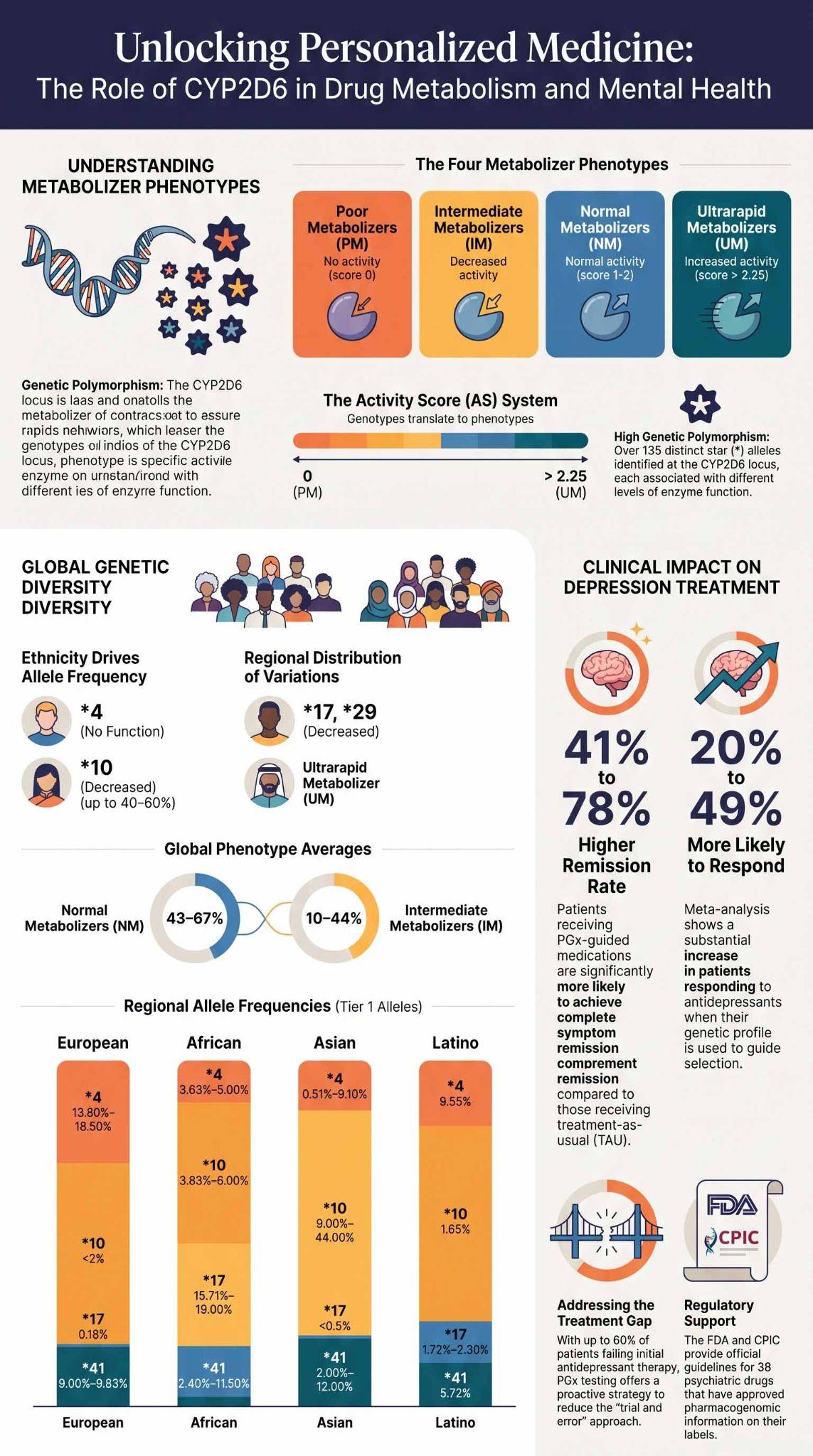
Two genes often used in antidepressant testing are CYP2D6 and CYP2C19. These genes help your body make enzymes that break down many medications in the liver. Differences in these genes can cause some people to process a medication faster or slower than expected.
A lab can test a sample from a cheek swab or blood sample. The results may place your enzyme activity into a group such as poor, intermediate, normal, rapid, or ultrarapid metabolizer.
| Metabolizer status | General meaning | Possible medication effect |
| Poor metabolizer | Lower enzyme activity | Some medications may stay in the body longer |
| Intermediate metabolizer | Reduced enzyme activity | Medication exposure may differ from average |
| Normal metabolizer | Expected enzyme activity | Typical medication processing is expected |
| Rapid metabolizer | Higher enzyme activity | Some medications may leave the body faster |
| Ultrarapid metabolizer | Much higher enzyme activity | Some medications may have lower exposure |
These categories do not tell your clinician everything about a medication. Your age, other medications, health conditions, symptoms, and past treatment response also matter.
For example, CYP2C19 can affect the processing of medications such as citalopram, escitalopram, and sertraline. CYP2D6 can affect the processing of several antidepressants, including venlafaxine and some tricyclic antidepressants.
According to the U.S. Food and Drug Administration (FDA):
“Specific genetic variants are FDA-cleared to help guide medication exposure considerations, though genetic information remains just one factor in your overall treatment response.” – FDA.
Commercial reports may also use colors to group medications. A green, yellow, or red category is not a universal medical standard. A color does not guarantee that a medication will work or that it should never be used.
Who May Benefit From Pharmacogenomic Testing Psychiatry?

You may want to discuss testing with your clinician if you have had trouble finding a medication that works well or causes manageable side effects.
Testing may be more useful when there is a clear treatment question. For example, your clinician may want to know whether your body is likely to process a medication much faster or slower than expected.
Your medical history still comes first. A clinician may review:
- Which medications you have tried
- The doses you took
- How long you took each medication
- Any side effects you experienced
- How well each medication helped
- Other medications you currently take
- Your treatment goals and preferences
Testing may be worth discussing when:
- Several antidepressants have not provided enough symptom relief.
- You have had significant side effects at standard doses.
- You take several medications that may interact.
- Your clinician has a reason to suspect unusual medication metabolism.
That does not mean everyone starting an antidepressant needs genetic testing. For many people, a standard psychiatric evaluation provides enough information to choose an initial treatment.
Current clinical guidance does not support routine pharmacogenomic testing for every person starting treatment for depression. The value of testing depends on the patient and the clinical question.
For patients seeking care in North Carolina, MedPsych Integrated offers dedicated outpatient psychiatric services in Raleigh and Cary, NC tailored to your individual health history.
How Does Antidepressant Medication Matching Work?
Antidepressant medication matching uses genetic information to help estimate how your body may process certain medications. It does not predict with certainty whether a medication will relieve your symptoms.
CYP2C19 is one example. If a person processes a medication more slowly, the medication may reach higher levels in the body at a standard dose. A clinician may then consider a lower starting dose, a slower dose increase, or another medication.
The opposite can also happen. A person who processes a medication very quickly may have lower medication exposure. In some cases, this may affect whether the usual dose provides enough benefit.
The important point is that medication processing and treatment response are not the same thing.
You can process a medication at an expected rate and still find that it does not help your symptoms enough. You can also have a genetic result that suggests a dosing change without needing to stop the medication.
Your clinician may use the test as one piece of information when making a treatment decision.
| Test result | What it may suggest | What it does not prove |
| Lower concern | Fewer known genetic concerns | That the medication will work |
| Dose or exposure concern | A dose change may be worth considering | That the medication will fail |
| Higher concern | Another medication may be worth reviewing | That the medication can never be used |
According to National Institutes of Health (NIH):
“The Clinical Pharmacogenetics Implementation Consortium provides evidence-based guidelines to help clinicians translate genotypes into practical medication dosing decisions.” (National Institutes of Health)
For more information about conditions managed alongside medication treatment, visit MedPsych Integrated’s conditions treated page.
What Does Genetic Test Cost and Coverage Depend On?

Genetic test cost depends on the laboratory, the type of panel, your insurance plan, and whether you pay part or all of the bill.
Some pharmacogenomic tests may cost around $100 to several hundred dollars. Broader panels can cost more. Your actual out-of-pocket cost may be lower if your insurance plan covers part of the test.
Before you order a test, ask the laboratory or your insurance company about:
- The total test price
- Your expected out-of-pocket cost
- Whether the lab is in network
- Whether prior authorization is required
- Whether your plan has medical necessity rules
- Whether follow-up visits are included
Genetic test coverage varies by insurance plan. Some plans may cover testing when there is a documented clinical reason. Other plans may limit coverage or consider certain tests investigational.
Do not assume that a test is covered because a clinician recommends it. Ask your insurance company for the details before testing.
You can also ask the testing company whether financial assistance is available. If the quoted price seems unclear, request a written estimate before the sample is collected.
If you want to discuss whether testing fits your treatment plan, you can use MedPsych Integrated’s outpatient psychiatric referral form.
Which Medication Metabolism Genes Are Examined Most Often?
Genetic testing can provide useful information about how your body may process some medications. It does not replace a psychiatric evaluation or your clinician’s judgment.
The results should be reviewed in the context of your full treatment history. Your clinician may also consider other factors that genetic testing cannot measure, such as your symptoms, sleep, stress, other health concerns, medication adherence, and previous treatment response.
You should also ask what genes the test covers and how the laboratory interprets the results. Different commercial panels may test different genes and use different report formats.
A test result should not be treated as a simple list of medications that are “good” or “bad.” Instead, it can help your clinician understand whether certain medications may need closer review.
If you are considering testing, ask your clinician:
- What treatment question are we trying to answer?
- What will this test add to my current treatment plan?
- Which genes and medications does the test cover?
- How will the results affect dosing or medication choices?
- What will I pay after insurance?
For some patients, this information may help reduce uncertainty when choosing or adjusting medication. For others, the results may not change the treatment plan.
The best choice depends on your individual history and the reason for testing.
Next Steps for Personalized Treatment
Exploring genetic testing for antidepressants can offer useful biological guidance when standard prescriptions have caused difficult side effects or limited relief. Because testing is only one part of comprehensive care, reviewing results with an experienced psychiatric provider ensures treatment decisions remain grounded in your overall medical history.
MedPsych Integrated provides personalized psychiatric evaluations, pharmacogenomic testing guidance, and medication management in Raleigh and Cary, NC. Schedule a consultation with MedPsych Integrated today to discuss your symptoms and determine whether genetic testing aligns with your treatment goals.
Crisis Support: If you or someone you know is struggling or in crisis, help is available. Call or text 988 or chat at 988lifeline.org to reach the Suicide & Crisis Lifeline.
FAQ
What Does Genetic Testing for Antidepressants Involve?
This testing analyzes specific liver enzyme genes, such as CYP2D6 and CYP2C19, using a simple cheek swab or blood sample to evaluate how your body metabolizes medication. Results help your psychiatric provider adjust dosages or choose alternative medications, though they do not guarantee clinical response.
How Does Antidepressant Medication Matching Help Clinicians?
Antidepressant medication matching can help clinicians identify genetic factors that may affect how quickly you process certain medications.
This information may be useful when a patient has experienced unexpected side effects or limited benefit from previous treatment. A clinician can combine the results with medication history and other clinical information.
The goal is not to find a guaranteed “perfect” medication. The goal is to provide another piece of information that may support treatment decisions.
What Is the Typical Genetic Test Cost?
Genetic test cost can range from about $100 to several hundred dollars, depending on the laboratory and test panel.
Broader tests may cost more. Insurance coverage, deductibles, and financial assistance can also affect what you pay.
Because prices vary, ask the testing company and your insurance provider for a current estimate before ordering the test.
How Can Patients Check Genetic Test Coverage?
You can check genetic test coverage by calling the member services number on your insurance card before testing.
Ask whether the laboratory is in network, whether prior authorization is required, and whether your plan has medical necessity rules for pharmacogenomic testing.
You can also ask your clinician or testing laboratory which billing information your insurer may need.
What Should I Ask My Clinician Before Testing?
Ask what treatment question the test is trying to answer, which genes and medications it covers, and how the results may affect dosing or medication choices. You should also ask what you will pay after insurance.