

Employers can help employees with depression by offering reasonable workplace accommodations, creating supportive communication channels, and connecting staff with professional mental health care. Practical support protects employee well-being while keeping daily workplace operations steady and productive. Depression can affect focus, energy, decision-making, and attendance. Even routine tasks may become harder to manage.
But support doesn’t have to be complicated. Managers don’t need to diagnose anyone or act as therapists. They can listen without judgment, notice changes in work performance, and explain what help is available. Clear policies also give employees more confidence to ask for support without fear of being treated differently. Every workplace is different, so the right approach depends on employees’ needs. Keep reading to learn how employers can help.
Key Takeaways
- Early communication: Managers should focus private check-ins on work performance and support rather than diagnosing personal medical issues.
- Practical accommodations: Flexible hours, clear task prioritization, and reduced workspace distractions make routine responsibilities manageable.
- Confidential resources: Employers should ensure clear, private pathways to mental health benefits, EAP programs, and qualified care.
Best Ways to Help Employees With Depression
A supportive workplace starts with the way managers treat people. Employees should not have to share their medical history just to ask for help with a deadline or workload.
For example, a manager may notice that an employee has missed several deadlines. The first response should not be an accusation of laziness. A private conversation can help the manager understand whether the employee needs clearer instructions, a review of priorities, or another form of support.
Employers can also make mental health resources easier to find. Information about counseling and insurance should be available in staff handbooks or on the company website. Employees should not have to ask several people before finding the right contact.
Regular check-ins can help, too. A short conversation about workload may give an employee the chance to raise a concern before it grows into a bigger problem. The manager does not need to ask personal questions about symptoms or medication. The focus can stay on work and what might help.
“Manager training for mental health, which helps managers recognize and respond to supervisees experiencing emotional distress” – World Health Organization.
And employees should have a say in the process. A change that helps one person may not suit another.
How Can Managers Recognize Depression at Work?

Depression affects people in different ways. One employee may become quiet and withdrawn. Another may still attend meetings and finish projects but feel exhausted throughout the day. There is no single way to tell whether someone has depression.
Managers may notice changes such as:
- Trouble focusing or making everyday decisions.
- Low energy during the workday.
- More missed deadlines or absences.
- Less communication with colleagues.
- Difficulty completing tasks that once felt manageable.
- Changes in mood or participation.
These signs do not confirm depression. Stress, poor sleep, family problems, and other health concerns can affect work in similar ways. Managers should not try to diagnose an employee based on what they observe.
A respectful conversation is a better place to start. A manager might say, “I noticed that work has seemed harder to manage lately. Is there anything about your workload that we could look at together?”
This gives the employee room to respond without pressure. They may explain what is happening, ask for a work adjustment, or choose not to discuss personal matters. All three responses should be handled respectfully.
How Should Employers Talk to Employees About Depression?
Talking about mental health can feel awkward. A manager may worry about saying the wrong thing or making the employee uncomfortable. The answer is not to avoid the conversation altogether. It is to keep it respectful and simple.
Start by listening. Let the employee finish speaking before offering advice. Ask whether any work related changes would help, and explain what support the company can offer.
If an employee shares that they have depression, the manager does not need to find the perfect response. A simple acknowledgment can help. For example, “Thank you for telling me. Let’s talk about what support may be available at work.”
Some common responses can do more harm than good. Saying “Everyone feels sad sometimes” may make the employee feel that their experience is being dismissed. Telling them to think positively can have the same effect.
Privacy matters just as much. Managers should not share the conversation with coworkers out of curiosity or concern. If HR needs certain information to review a formal accommodation request, the employee should be told how that information will be handled.
Managers are there to support the employee at work, not to provide treatment. When professional care may help, they can explain how to access the company’s benefits or other available resources. Employees who want to discuss their mental health concerns with a provider may also explore psychotherapy as part of their care.
What Workplace Accommodations Support Staff Facing Depression?

Some employees with depression can manage their usual duties without changes. Others may need a little flexibility while they receive care. The right support depends on the person, the job, and the needs of the workplace.
Possible accommodations include:
- Flexible work hours. An employee may need to adjust their schedule to attend medical appointments or manage their daily routine.
- Clear task priorities. A long list of urgent tasks can feel overwhelming. Managers can help by making it clear which jobs need attention first.
- Changes to deadlines. When possible, a manager may adjust a deadline or divide a large project into smaller tasks.
- A quieter work area. Fewer distractions may help an employee who is having trouble concentrating.
- Regular check-ins. Short meetings can help both the employee and manager discuss progress and identify problems early.
Not every change will work for every role. An employee who works directly with customers may have different needs from someone who works mostly on a computer.
The best approach is to discuss possible changes with the employee. Employers should also check whether the arrangement is helping. If it is not, they can review other options. Professionals experiencing depression or work-related stress can also explore psychiatry for professionals to learn about available mental health care options.
What Legal Protections Apply to Workers With Depression?
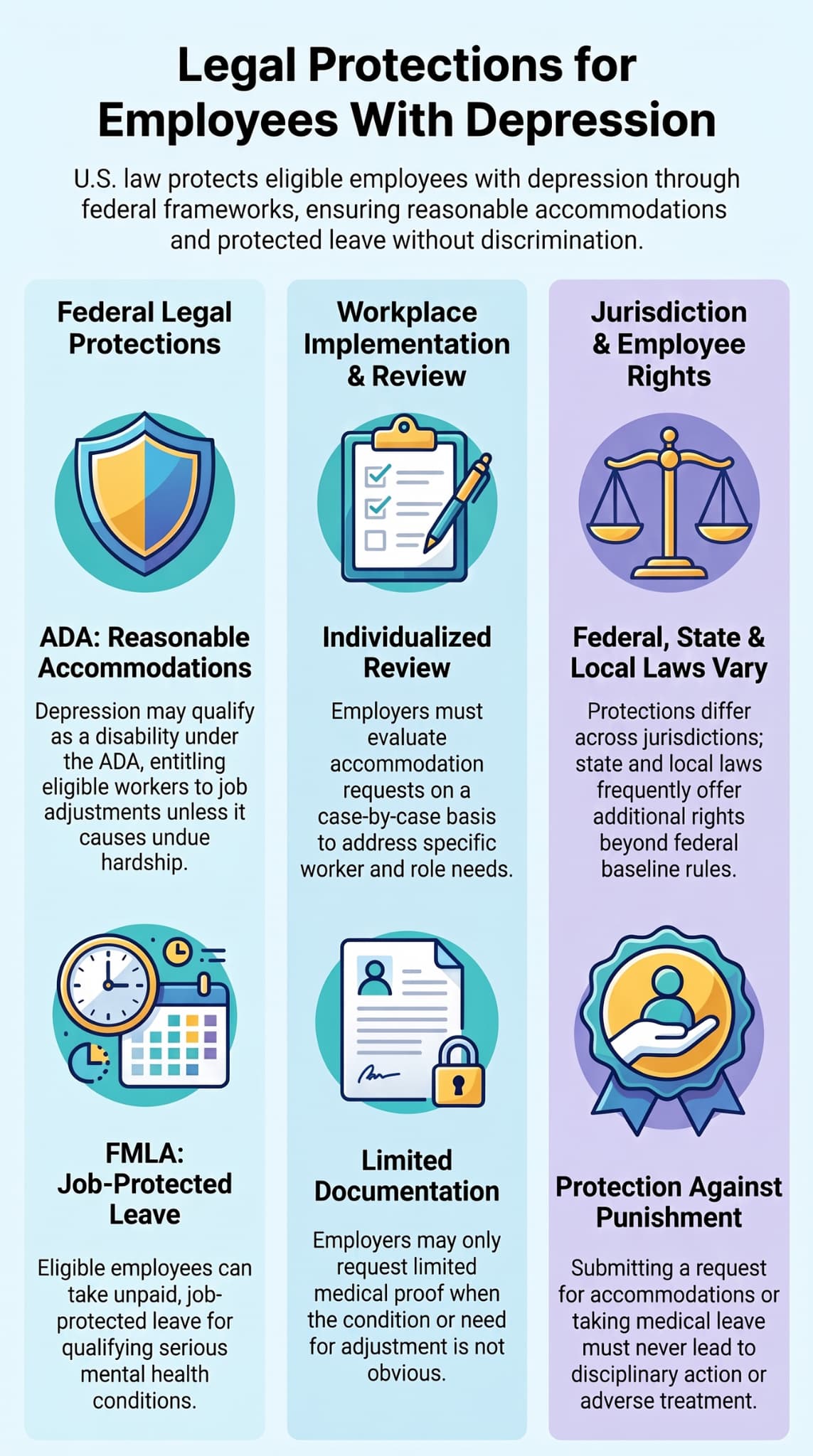
In the United States, depression may qualify as a disability under the Americans with Disabilities Act (ADA). This depends on how the condition affects the individual. Eligible employees may be entitled to reasonable accommodations unless providing them would cause the employer undue hardship.
“The law also requires an employer to provide a reasonable accommodation to an employee or job applicant with a disability if they need it to perform an important job function” – U.S. Equal Employment Opportunity Commission.
Employers should consider accommodation requests individually. One employee may need a schedule change, while another may need a different adjustment. In some cases, an employer can request limited medical documentation if the disability or need for accommodation is not clear.
The Family and Medical Leave Act (FMLA) may also allow eligible employees to take unpaid, job-protected leave for certain serious health conditions, including qualifying mental health conditions. Eligibility depends on factors such as the employee’s work history and the employer’s coverage.
These protections do not apply in the same way to every situation. State and local laws may provide additional rights. Employers should ask HR or qualified legal counsel when they are unsure how a rule applies.
Most importantly, a request for help should not be treated as a reason to punish an employee. Employers need to follow the relevant laws and their own workplace policies.
How Can Employers Support a Return to Work After Depression Leave?

Coming back to work after medical leave can take some adjustment. An employee may be glad to return but still feel unsure about managing a full workload. A little planning can help make the transition easier.
Before the employee returns, HR and the manager can discuss their duties, schedule, and any approved accommodations. The employee should have a chance to explain what may help them manage their work.
A return-to-work plan may include:
- Setting clear priorities for the first few weeks.
- Reviewing deadlines and the expected workload.
- Arranging approved changes to working hours, where appropriate.
- Scheduling private check-ins to discuss work-related concerns.
- Reviewing the plan after the employee has settled back into the role.
Managers should not expect an employee to explain every detail of their recovery. They should focus on the work itself and any support that has been agreed upon.
The plan may need to change over time. Regular conversations can help the employee and manager see what is working and what needs another look. Employees who need additional support during recovery can discuss depression treatment options with a qualified psychiatric provider.
Supporting Employee Mental Health in the Workplace
Depression can affect overall workplace well-being, but taking clear steps to help employees with depression creates a resilient, supportive environment. Providing timely access to specialized mental health resources ensures your team stays healthy and supported.
MedPsych Integrated offers personalized outpatient psychiatric evaluations and medication management in Raleigh and Cary, North Carolina. With flexible appointment options, including telepsychiatry, employees can explore care that fits their needs. Contact MedPsych Integrated to learn more about available services and discuss suitable treatment options.
FAQs
Can an Employee Be Fired for Missing Work Because of Depression?
An employee may have legal protections when depression affects attendance, depending on the circumstances and applicable laws. In the United States, eligible workers may qualify for job-protected leave under FMLA or reasonable accommodations under the ADA. Employers should review each case individually, document attendance concerns, and consult HR before taking disciplinary action.
What Reasonable Accommodations Can Employees Request for Depression?
Employees may request flexible work hours, reduced distractions, adjusted workloads, modified schedules, or time off for treatment. Under the ADA, employers may need to provide reasonable accommodations for a qualifying condition unless doing so causes undue hardship. The appropriate adjustment depends on the employee’s needs and job duties. HR can help assess requests and document agreed changes.
Does an Employee Have to Disclose Depression to Qualify for Workplace Accommodations?
Employees generally do not need to disclose a diagnosis to their entire team. However, in the United States, an employer may request limited medical documentation when the disability or need for accommodation is not obvious. Employees should contact HR to understand the process. Medical information should be kept confidential and shared only when necessary.
Can Employees Use FMLA or Short-Term Disability for Depression Treatment?
Eligible employees may use FMLA leave for a qualifying serious mental health condition, including depression, when legal requirements are met. Short-term disability benefits may replace part of an employee’s income if the policy covers the condition and eligibility rules are satisfied. These benefits serve different purposes, so employees should check both leave rules and insurance policy terms with HR.
How Can Employers Help Employees With Depression Manage Heavy Workloads?
Employers can review deadlines, staffing levels, overtime, and task distribution to identify sources of excessive pressure. Workload management may include setting clearer priorities, redistributing urgent tasks, and allowing flexible schedules where practical. Managers should address performance concerns consistently while offering support. Regular workload reviews can help reduce avoidable stress and support employee wellbeing without asking workers to share private medical details.
References
- https://www.who.int/news-room/fact-sheets/detail/mental-health-at-work
- https://www.eeoc.gov/mental-health-conditions-resources-job-seekers-employees-and-employers